Museo Nacional de Antropología
Mexico City · Mexico · Founded 1964
Quick answer
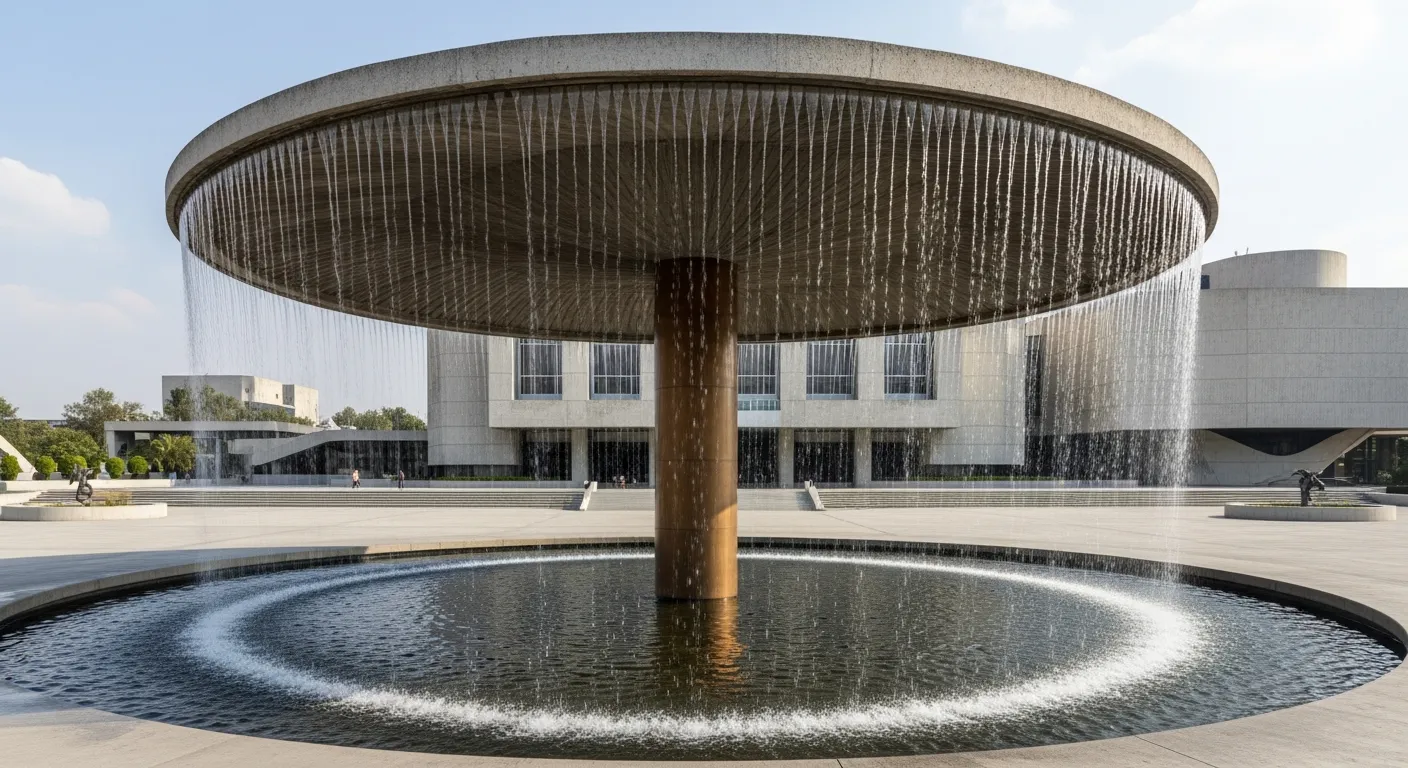
Museo Nacional de Antropología in Mexico City, Mexico — designed by Pedro Ramírez Vázquez and opened in 1964, the museum is famous for its central courtyard sheltered by 'El Paraguas', a giant carved umbrella supported on a single column with water cascading around it. Open Tuesday to Sunday: 9:00 AM – 6:00 PM; closed Mondays. Admission: MX$210 for foreign visitors; MX$105 for Mexican nationals and residents. Allow 3–5 hours.
Visitor information last reviewed 25 September 2026. Check the official museum site for current details.
Museo Nacional de Antropología at a glance: hours, tickets and time needed
| Opening hours | Tuesday to Sunday: 9:00 AM – 6:00 PM |
|---|---|
| Closed | Mondays |
| Admission | MX$210 for foreign visitors; MX$105 for Mexican nationals and residents |
| Free or reduced entry | Sundays free for Mexican nationals and foreign residents of Mexico (with ID) · Under 13 free · Seniors 60+ with INAPAM card free · Visitors with disabilities free |
| Booking | Tickets usually available on the day |
| Time needed | 3–5 hours |
| Best time to visit | Tuesday or Wednesday at 9 AM opening — before school groups and tour buses arrive. |
| Getting there | Metro: Auditorio or Chapultepec metro — 10-minute walk through Chapultepec Park |
| Address | Av. Paseo de la Reforma s/n, Polanco, Bosque de Chapultepec I Secc, 11560 Ciudad de México, Mexico |
| Official website | mna.inah.gob.mx |
Checked 2026-09-25 against the official website. Prices and hours change — confirm before you travel.
What is Museo Nacional de Antropología known for?
The Museo Nacional de Antropología in Mexico City is Mexico's flagship anthropology museum and one of the greatest archaeological museums in the world. Designed by Pedro Ramírez Vázquez and opened in 1964, it occupies a vast building in Chapultepec Park.
Twenty-three permanent galleries cover the cultures of Mesoamerica and the modern indigenous peoples of Mexico, arranged around a central courtyard sheltered by 'El Paraguas' — a giant carved concrete umbrella on a single column with water cascading around it.
The Aztec Sun Stone (Piedra del Sol), colossal Olmec heads, and the jade death mask of K'inich Janaab' Pakal from Palenque are among the most celebrated objects in the Western Hemisphere.
Allow at least half a day — most visitors spend three to four hours minimum, and a thorough visit can fill an entire day.
Best for: History Enthusiasts · Families · First-Time Visitors to Mexico City
Mexico City's Essential Anthropology Museum
The Museo Nacional de Antropología in Chapultepec Park is Mexico's most visited museum and the authoritative presentation of Mesoamerican civilisations. The monumental umbrella fountain in the central courtyard anchors a two-story pavilion layout with regional halls radiating from the plaza. Spanish labels dominate, but English audio guides and selective bilingual text cover major objects. Chapultepec Park surrounding the museum includes lakes, a zoo, and Chapultepec Castle on the hill above. Official guides in Spanish and English can be hired at the entrance for deeper context on Mexica cosmology. The umbrella fountain in the courtyard runs on a schedule and makes an ideal meeting point between regional halls. Pedro Ramirez Vazquez designed the building with a central courtyard umbrella fountain that has become the museum's most recognizable architectural feature.
Tickets can be purchased on-site, though online booking speeds entry on weekends when Mexican families fill the galleries. The museum's scale demands selective routing: most international visitors prioritize Mexica, Maya, and Olmec halls before exploring Gulf Coast, Oaxaca, or ethnographic upper galleries. Plan four hours for serious coverage, or two hours for the Sun Stone and Maya jade route. Photography permits apply to some special exhibitions; permanent halls generally allow non-flash personal images. The museum bookstore stocks academic titles in Spanish essential for researchers continuing to Oaxaca or Yucatan sites. Upper-level ethnographic galleries present living indigenous communities with respect protocols updated through community consultation. Chapultepec Park location allows combining the museum with Chapultepec Castle and lakeside walks for a full day without leaving the green space.
Security checks bags at entry; large backpacks must be stored. The surrounding park includes Chapultepec Castle and lakes, suitable for combining a half-day museum visit with outdoor walking. Closed Mondays like most Mexican federal museums. Chapultepec Park surrounding the museum includes lakes, a zoo, and Chapultepec Castle on the hill above. Official guides in Spanish and English can be hired at the entrance for deeper context on Mexica cosmology. The umbrella fountain in the courtyard runs on a schedule and makes an ideal meeting point between regional halls. Photography permits apply to some special exhibitions; permanent halls generally allow non-flash personal images. Regional halls for Teotihuacan, Olmec, Maya, and Mexica radiate from the courtyard, enabling focused visits when time is limited.
Mesoamerican Masterpieces in Context
The Aztec Sun Stone, a basalt calendar monolith weighing twenty-four tons, occupies its own Mexica hall and draws continuous crowds. Maya galleries display jade death masks, stelae rubbings, and reconstructed tomb offerings explaining hieroglyphic writing and calendrical systems. Olmec colossal heads, the Americas' earliest major civilization markers, demonstrate stone carving at monumental scale. The museum bookstore stocks academic titles in Spanish essential for researchers continuing to Oaxaca or Yucatan sites. Upper-level ethnographic galleries present living indigenous communities with respect protocols updated through community consultation. The Sun Stone calendar monolith weighs twenty-four tons and occupies a Mexica hall designed to accommodate continuous crowds and photography.
Ethnographic displays on the upper level present living indigenous cultures with textiles, ritual objects, and documentary film, counterbalancing archaeological focus below. Regional halls for Teotihuacan, Toltec, and western Mexico connect site visits tourists often make outside Mexico City. Recent reinterpretation emphasizes indigenous perspectives on colonial-era collections and repatriation debates. Upper-level ethnographic galleries present living indigenous communities with textiles and ritual objects alongside documentary film installations.
The architecture by Pedro Ramírez Vázquez integrates modernist concrete with pre-Hispanic symbolic references, itself worth studying. Museum shop replicas of calendar stones and Maya glyphs are popular souvenirs. Scholarly catalogues in Spanish remain the definitive reference for Mesoamerican research. Official bilingual guides available at entry explain Nahua cosmology and calendrical systems that contextualize the Sun Stone beyond popular myth.
Mexico City's Essential Anthropology Museum
Chapultepec Park holds multiple museums, but MNA remains the anchor — its Aztec Sun Stone alone justifies the trip, and the surrounding halls contextualise every major pre-Columbian civilisation from Olmec jade to Maya codices. The central courtyard umbrella fountain creates a natural meeting point between wings when visiting with groups who split to explore different regions of Mexico.
Sunday free admission for Mexican residents fills the museum with local families — foreign visitors should buy tickets online and arrive at opening for a quieter first hour among the Mexica galleries. English labels cover major objects, but hiring a licensed guide unlocks narrative depth on ritual sacrifice, calendar systems, and colonial contact that labels alone cannot convey.
Allow three to four hours minimum. The ground-floor ethnographic galleries on contemporary indigenous communities complement archaeology upstairs and prevent the visit from feeling purely ancient — living cultures connect directly to the objects in the cases above.
The Maya hall reconstructed tomb facades and jade death masks rank among the finest Mesoamerican displays anywhere outside Guatemala and Belize. Budget extra time if anthropology is your primary interest — skimming all regional halls in under two hours is physically possible but intellectually unsatisfying.
Olmec colossal heads in the Gulf Coast gallery greet visitors with basalt faces weighing over twenty tonnes each — among the most photographed objects in the museum and essential context for understanding later Mexica and Maya civilisations.
Teotihuacan mural fragments and featherwork headdresses in the Mexica hall demonstrate artistic sophistication equal to any Old World civilisation — allow thirty extra minutes if pre-Columbian art is your primary research interest.
Outdoor garden reconstructions of regional architecture from Yucatán and Oaxaca provide shaded rest between intensive gallery sessions — bring water during Mexico City altitude adjustment on your first days in the capital.
Coat check and wheelchair rental at main entrance simplify navigation of the large floor plan — pick up a paper map because mobile signal is weak in basement-level Mexica galleries.
Wing-by-wing visitor guide
Focused routes for Museo Nacional de Antropología — pick one wing per visit to avoid museum fatigue.
Mexica (Aztec) Hall
⏱ 60 minutesThe Mexica pavilion presents Tenochtitlan-era sculpture, ceramics, and the iconic Sun Stone at its center. Interpretation explains Aztec cosmology, sacrifice, and empire before Spanish conquest. Coatlicue monumental sculpture in the Mexica hall conveys Aztec creation mythology through serpent skirt iconography at intimidating scale.
- • Aztec Sun Stone (Calendar Stone)
- • Coatlicue monumental sculpture
- • Templo Mayor eagle warrior offering
- • Turquoise mosaic masks and shields
- • Ceramic ritual vessels and figurines
Maya Hall
⏱ 75 minutesJade, stucco, and limestone masterpieces document Classic Maya city-states, writing, and royal burials. Full-scale casts of Pakal's tomb lid and jade mask replicas illustrate Palenque discoveries. Jade death masks from Palenque tombs demonstrate Maya royal burial practices and the civilization's mastery of stone carving technique.
- • Jade death mask from Palenque
- • Stelae with hieroglyphic inscriptions
- • Ceramic codex-style vessels
- • Limestone relief panels from Yaxchilan
- • Scale model of Tikal temple complex
Olmec and Gulf Coast
⏱ 45 minutesColossal basalt heads and ritual axes introduce the Olmec mother culture of Mesoamerica. Gulf Coast galleries extend into Veracruz traditions with smiling figurines and ballgame imagery. Olmec colossal heads weigh several tons each and represent the earliest major civilization markers in Mesoamerican archaeological chronology.
- • Olmec colossal head sculptures
- • Celt stones with incised deity faces
- • Veracruz smiling figurines
- • Rubber ballgame equipment displays
- • Early writing and calendar precursors
How long do you need at Museo Nacional de Antropología?
Allow 3–5 hours. A focused route through 4 must-see highlights at Museo Nacional de Antropología without museum fatigue. Follow the stops in order:
- 1
Aztec Sun Stone (Piedra del Sol)
📍 Ground floor, Mexica (Aztec) Hall
The iconic 24-ton basalt calendar stone depicting the Aztec cosmos — the most famous single object in Mexican archaeology.
- 2
Colossal Olmec Head
📍 Ground floor, Olmec Gallery
A massive basalt head from San Lorenzo — the face that launched the study of Mesoamerica's first civilisation.
- 3
Jade Death Mask of K'inich Janaab' Pakal
📍 Upper floor, Maya Gallery
A mosaic jade mask from the tomb of Palenque's greatest king, discovered in the Temple of the Inscriptions in 1952.
- 4
Teotihuacan Murals (reproductions)
📍 Teotihuacan Gallery
Full-scale reproductions of the great frescoes from Teotihuacan, including the Paradise of Tlaloc and the Jaguar mural.
What are the must-see works at Museo Nacional de Antropología?
4 highlights that define the collection: Aztec Sun Stone (Piedra del Sol), Colossal Olmec Head, Jade Death Mask of K'inich Janaab' Pakal and more.
Aztec Sun Stone (Piedra del Sol)
Aztec sculptors · c. 1502
📍 Ground floor, Mexica (Aztec) Hall
The iconic 24-ton basalt calendar stone depicting the Aztec cosmos — the most famous single object in Mexican archaeology.
Colossal Olmec Head
Olmec sculptors · c. 1200 BCE
📍 Ground floor, Olmec Gallery
A massive basalt head from San Lorenzo — the face that launched the study of Mesoamerica's first civilisation.
Jade Death Mask of K'inich Janaab' Pakal
Maya craftsmen · 7th century CE
📍 Upper floor, Maya Gallery
A mosaic jade mask from the tomb of Palenque's greatest king, discovered in the Temple of the Inscriptions in 1952.
Teotihuacan Murals (reproductions)
Teotihuacan painters · c. 450 CE
📍 Teotihuacan Gallery
Full-scale reproductions of the great frescoes from Teotihuacan, including the Paradise of Tlaloc and the Jaguar mural.
Collections and highlights
- • Piedra del Sol (Aztec Sun Stone)
- • Olmec colossal heads
- • Mayan funerary mask of K'inich Janaab' Pakal
- • Teotihuacan murals and reconstructions
- • Modern indigenous peoples galleries
Tips for visiting Museo Nacional de Antropología
- 1.
Best time to visit
Tuesday or Wednesday at 9 AM opening — before school groups and tour buses arrive.
- 2.
Crowds & busy periods
Very busy on weekends and during Mexican holidays; arrive early.
- 3.
Tickets & booking
MX$210 for foreign adults; MX$105 for Mexican nationals and residents, who enter free on Sundays. Under-13s are free.
- 4.
Food & cafés nearby
Museum café; restaurants along Reforma; street food at Chapultepec park entrances.
- 5.
Accessibility
Accessible main galleries; ramps between pavilions.
How do you get to Museo Nacional de Antropología?
- metro Auditorio or Chapultepec metro — 10-minute walk through Chapultepec Park
- bus Multiple routes along Paseo de la Reforma to the museum entrance
- walk 15-minute walk from Chapultepec metro through the park
Address: Av. Paseo de la Reforma s/n, Polanco, Bosque de Chapultepec I Secc, 11560 Ciudad de México, Mexico
Museo Nacional de Antropología: frequently asked questions
Where is the Sun Stone?
It dominates the central Mexica (Aztec) hall on the ground floor.
How much time should I plan?
Most visitors spend at least three to four hours; a full visit can easily fill a day.
How long should I spend at Museo Nacional de Antropología?
Plan 3–5 hours for the highlights of Museo Nacional de Antropología. Our 4-stop route — Aztec Sun Stone (Piedra del Sol), Colossal Olmec Head, Jade Death Mask of K'inich Janaab' Pakal and more — is designed to fit that time. Add extra time for temporary exhibitions, the shop and the café.
What is Museo Nacional de Antropología best known for?
Designed by Pedro Ramírez Vázquez and opened in 1964, the museum is famous for its central courtyard sheltered by 'El Paraguas', a giant carved umbrella supported on a single column with water cascading around it. Key highlights include Piedra del Sol (Aztec Sun Stone), Olmec colossal heads, Mayan funerary mask of K'inich Janaab' Pakal.
How do I get tickets for Museo Nacional de Antropología?
Admission: MX$210 for foreign visitors; MX$105 for Mexican nationals and residents. Tickets are usually available on the day, but booking online saves queue time in peak season. Official site: https://www.mna.inah.gob.mx/
Can I visit Chapultepec Castle the same day?
Yes — the castle is a 20-minute walk through the park. Allow a full day for both the anthropology museum and the castle.
Is Museo Nacional de Antropología open on Mondays?
No — Museo Nacional de Antropología is closed every Monday. It is open Tuesday to Sunday: 9:00 AM – 6:00 PM. Plan a different museum for that day, and check the official website for holiday changes.
What are Museo Nacional de Antropología's opening hours?
Museo Nacional de Antropología is open Tuesday to Sunday: 9:00 AM – 6:00 PM, and closed Mondays. Hours can change for holidays and events, so check the official website before you go.
Is Museo Nacional de Antropología free to visit?
Not for everyone. Standard admission: MX$210 for foreign visitors; MX$105 for Mexican nationals and residents. Free or reduced entry: Sundays free for Mexican nationals and foreign residents of Mexico (with ID); Under 13 free; Seniors 60+ with INAPAM card free; Visitors with disabilities free.