Frida Kahlo Museum
Mexico City · Mexico · Founded 1958
Quick answer
Frida Kahlo Museum in Mexico City, Mexico — la Casa Azul — the cobalt-blue house in Coyoacán where Frida Kahlo was born, lived, and died, now a museum displaying her art, personal belongings, and the studio where she painted. Open Tuesday to Sunday: 10:00 AM – 6:00 PM; closed Mondays. Admission: From MX$270 standard admission. Allow 90 minutes and book a timed ticket ahead.
Visitor information last reviewed 30 June 2026. Check the official museum site for current details.
Frida Kahlo Museum at a glance: hours, tickets and time needed
| Opening hours | Tuesday to Sunday: 10:00 AM – 6:00 PM |
|---|---|
| Closed | Mondays |
| Admission | From MX$270 standard admission |
| Free or reduced entry | Free on Sundays for Mexican nationals · Students discounted |
| Booking | Book a timed ticket in advance — peak slots sell out |
| Time needed | 90 minutes |
| Best time to visit | First entry slot (10:00 AM Tuesday–Friday) for the fewest crowds. |
| Getting there | Metro: Metro Line 3 to Coyoacán or Viveros station — 15-minute walk or 5-minute taxi through the colonial neighborhood |
| Address | Londres 247, Col. Del Carmen, Coyoacán, 04100 Mexico City, Mexico |
| Official website | museofridakahlo.org.mx |
Checked 2026-06-30 against the official website. Prices and hours change — confirm before you travel.
What is Frida Kahlo Museum known for?
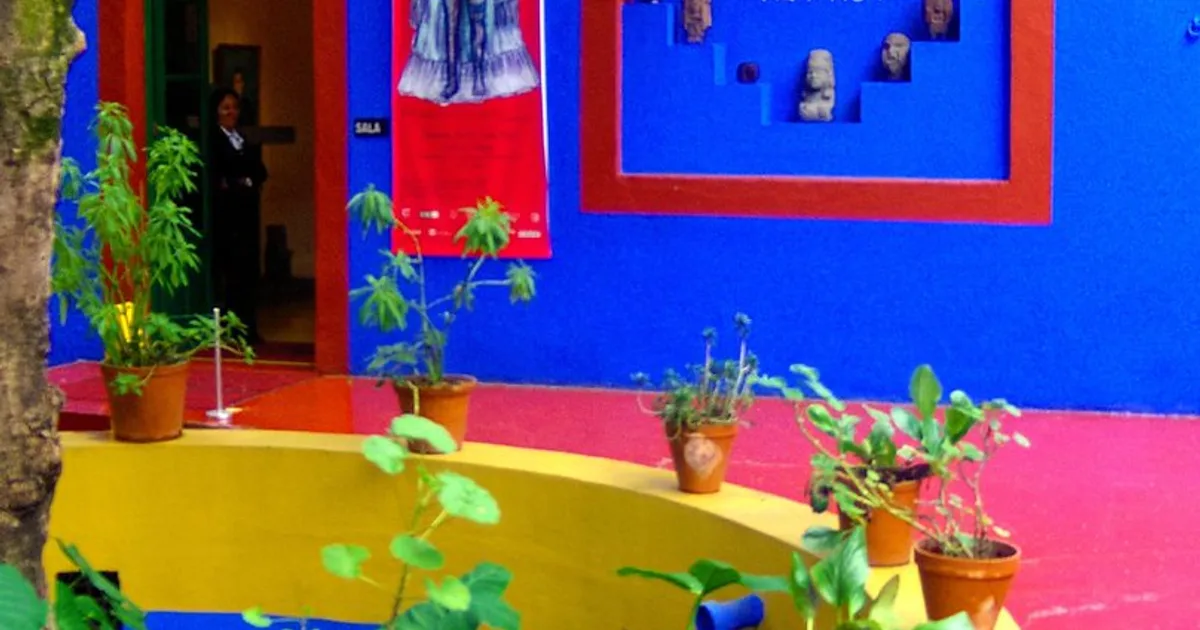
La Casa Azul — the cobalt-blue house at Londres 247 in Coyoacán — is where Frida Kahlo was born in 1907, lived for much of her life, and died in 1954. Converted into a museum four years after her death, it preserves the rooms, furniture, and personal belongings exactly as she left them, offering the most intimate encounter with the artist anywhere in the world.
The museum displays a rotating selection of Kahlo's paintings alongside her folk art collection, pre-Columbian artifacts collected with Diego Rivera, and the corsets, prosthetics, and medical devices she used after the bus accident that shattered her spine at age 18. Her studio on the upper floor — with the easel that held her final unfinished painting — overlooks the garden she designed with Rivera.
Rivera's influence is everywhere: he painted the courtyard fountain, designed the pyramid displaying pre-Columbian sculpture, and donated the house to the Mexican people after Kahlo's death. The kitchen, bedroom, and day bed where she painted while recovering remain among the most emotionally charged spaces in any artist's house museum.
Tickets sell out weeks in advance — the museum limits daily capacity to protect the fragile interiors. Coyoacán itself is one of Mexico City's most charming colonial neighborhoods, with the Leon Trotsky Museum a 10-minute walk away.
Best for: Art Lovers · First-timers · History Enthusiasts
How long do you need at Frida Kahlo Museum?
Allow 90 minutes. A focused route through 4 must-see highlights at Frida Kahlo Museum without museum fatigue. Follow the stops in order:
- 1
Viva la Vida (Long Live Life)
📍 Bedroom Gallery, Upper Floor
Kahlo's last painting, completed days before her death — watermelons sliced open with the words 'Viva la Vida' inscribed on the flesh.
- 2
Frida and the Caesarean
📍 Temporary exhibition rotation
A rarely displayed painting documenting Kahlo's miscarriage in Detroit — one of her most raw medical self-portraits.
- 3
The Two Fridas
📍 Permanent collection rotation
The original hangs in the Museo de Arte Moderno in Mexico City, but Casa Azul frequently displays high-quality reproductions and related preparatory works.
- 4
Diego Rivera's Day of the Dead Altar
📍 Courtyard, Ground Floor
Rivera's pre-Columbian pyramid and courtyard altar display over 600 votive objects and sculptures from Aztec, Maya, and Olmec cultures — one of the finest private pre-Columbian collections in Mexico.
What are the must-see works at Frida Kahlo Museum?
4 highlights that define the collection: Viva la Vida (Long Live Life), Frida and the Caesarean, The Two Fridas and more.
Viva la Vida (Long Live Life)
Frida Kahlo · 1954
📍 Bedroom Gallery, Upper Floor
Kahlo's last painting, completed days before her death — watermelons sliced open with the words 'Viva la Vida' inscribed on the flesh. A defiant meditation on mortality painted from her deathbed.
Frida and the Caesarean
Frida Kahlo · 1931
📍 Temporary exhibition rotation
A rarely displayed painting documenting Kahlo's miscarriage in Detroit — one of her most raw medical self-portraits. Works rotate due to light sensitivity; check current displays before visiting.
The Two Fridas
Frida Kahlo · 1939 (reproduction on display)
📍 Permanent collection rotation
The original hangs in the Museo de Arte Moderno in Mexico City, but Casa Azul frequently displays high-quality reproductions and related preparatory works. The double self-portrait remains central to understanding Kahlo's identity.
Diego Rivera's Day of the Dead Altar
Diego Rivera · permanent installation
📍 Courtyard, Ground Floor
Rivera's pre-Columbian pyramid and courtyard altar display over 600 votive objects and sculptures from Aztec, Maya, and Olmec cultures — one of the finest private pre-Columbian collections in Mexico.
Collections and highlights
- • Frida Kahlo's bedroom and deathbed
- • Artist's studio with original easel
- • Pre-Columbian collection — 600+ pieces
- • Traditional Mexican folk art and ex-votos
- • Personal wardrobe — Tehuana dresses and jewelry
- • Medical corsets and prosthetics
- • Diego Rivera's kitchen murals
- • Courtyard garden with pyramid and fountain
Tips for visiting Frida Kahlo Museum
- 1.
Best time to visit
First entry slot (10:00 AM Tuesday–Friday) for the fewest crowds. Avoid Sunday when Mexican nationals enter free.
- 2.
Crowds & busy periods
One of Mexico City's most oversubscribed attractions. Rooms are small and become congested quickly — book the earliest slot available.
- 3.
Tickets & booking
Only purchase at museofridakahlo.org.mx — third-party sellers charge inflated prices for invalid tickets. Tickets release 30 days ahead.
- 4.
Food & cafés nearby
No food inside; Coyoacán's Jardín Hidalgo plaza has excellent tostadas at Tostadas Coyoacán and coffee at El Jarocho. Mercado de Coyoacán nearby.
- 5.
Accessibility
Upper floor and studio accessible only by narrow staircase — not wheelchair accessible. Ground floor courtyard and some galleries are accessible.
How do you get to Frida Kahlo Museum?
- metro Metro Line 3 to Coyoacán or Viveros station — 15-minute walk or 5-minute taxi through the colonial neighborhood
- bus Metrobús Line 1 to Coyoacán stop, then taxi or colectivo — the museum is deep in a residential area not served directly by bus
- walk From Coyoacán's main plaza (Jardín Hidalgo) — 10-minute walk through tree-lined Londres street; combine with Trotsky Museum nearby
Address: Londres 247, Col. Del Carmen, Coyoacán, 04100 Mexico City, Mexico
Frida Kahlo Museum: frequently asked questions
Do you need to book Frida Kahlo Museum tickets in advance?
Yes — Casa Azul sells out days or weeks ahead, especially weekends. Book only through the official museofridakahlo.org.mx website to avoid overpriced third-party tickets.
How long should I spend at Frida Kahlo Museum?
Plan 90 minutes for the highlights of Frida Kahlo Museum. Our 4-stop route — Viva la Vida (Long Live Life), Frida and the Caesarean, The Two Fridas and more — is designed to fit that time. Add extra time for temporary exhibitions, the shop and the café.
What is Frida Kahlo Museum best known for?
La Casa Azul — the cobalt-blue house in Coyoacán where Frida Kahlo was born, lived, and died, now a museum displaying her art, personal belongings, and the studio where she painted. Key highlights include Frida Kahlo's bedroom and deathbed, Artist's studio with original easel, Pre-Columbian collection — 600+ pieces.
How do I get tickets for Frida Kahlo Museum?
Admission: From MX$270 standard admission. Book a timed-entry ticket on the official website before you go — popular slots sell out in peak season. Official site: https://www.museofridakahlo.org.mx/
Can you visit Casa Azul and the Leon Trotsky Museum in one morning?
Yes — the Leon Trotsky Museum (where Trotsky was assassinated in 1940) is a 10-minute walk from Casa Azul in the same Coyoacán neighborhood. Trotsky's house requires fewer advance reservations. Allow 90 minutes for Casa Azul and 45 minutes for Trotsky — together they form one of Mexico City's most compelling historical mornings.
Are Frida Kahlo's original paintings always on display at Casa Azul?
No — due to light sensitivity, only a selection of Kahlo's paintings is displayed at any time, and works rotate between Casa Azul and the Museo de Arte Moderno. The house itself — her bedroom, studio, kitchen, and garden — is the permanent draw. Check the museum website for current paintings on view.
What is the difference between Casa Azul and the Anahuacalli Museum?
Casa Azul in Coyoacán was Frida and Diego's home, focused on Frida's life and art. Anahuacalli — designed by Rivera as a volcanic-stone pyramid in San Ángel — houses Rivera's vast pre-Columbian collection. Rivera intended both to be visited together; a combined ticket is available. Anahuacalli is less crowded and architecturally extraordinary.
Is Frida Kahlo Museum open on Mondays?
No — Frida Kahlo Museum is closed every Monday. It is open Tuesday to Sunday: 10:00 AM – 6:00 PM. Plan a different museum for that day, and check the official website for holiday changes.
What are Frida Kahlo Museum's opening hours?
Frida Kahlo Museum is open Tuesday to Sunday: 10:00 AM – 6:00 PM, and closed Mondays. Hours can change for holidays and events, so check the official website before you go.
Is Frida Kahlo Museum free to visit?
No — standard admission is From MX$270 standard admission. Exceptions: Free on Sundays for Mexican nationals; Students discounted.