Fabergé Museum
Saint Petersburg · Russia · Founded 2013
Quick answer
Fabergé Museum in Saint Petersburg, Russia — the Fabergé Museum opened in 2013 in the restored Shuvalov Palace on the Fontanka River embankment in Saint Petersburg. Open daily, 10:00 AM – 8:45 PM. Admission: 500 RUB standard admission. Allow 1–1.5 hours.
Visitor information last reviewed 30 June 2026. Check the official museum site for current details.
Fabergé Museum at a glance: hours, tickets and time needed
| Opening hours | Daily: 10:00 AM – 8:45 PM |
|---|---|
| Admission | 500 RUB standard admission |
| Booking | Tickets usually available on the day |
| Time needed | 1–1.5 hours |
| Best time to visit | Weekday mornings at 10 AM opening — the egg gallery is quietest before tour groups arrive. |
| Getting there | Metro: Line 3 to Gostiny Dvor, then 15-minute walk along Nevsky Prospekt and across Anichkov Bridge to Fontanka embankment |
| Address | Fontanka River Embankment, 21, St Petersburg, 191011 |
| Official website | fabergemuseum.ru |
Checked 2026-06-30 against the official website. Prices and hours change — confirm before you travel.
What is Fabergé Museum known for?
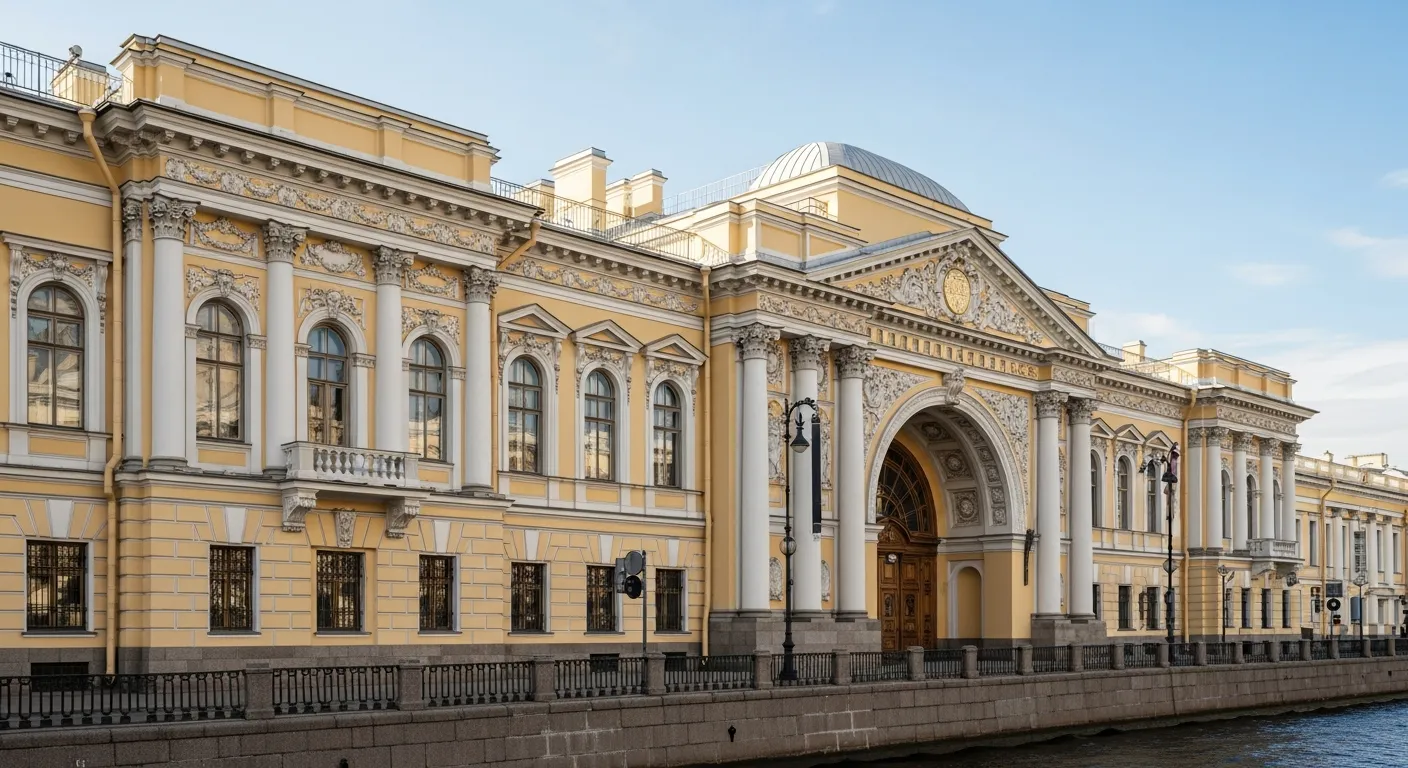
The Fabergé Museum opened in 2013 in the restored Shuvalov Palace on the Fontanka River embankment in Saint Petersburg. Founded by the Link of Times Foundation of Viktor Vekselberg, it holds the world's largest collection of works by Carl Fabergé — including nine Imperial Easter eggs, more than any other museum.
The Shuvalov Palace itself is a nineteenth-century aristocratic residence with restored interiors — parquet floors, stucco ceilings, and period furniture create the atmosphere in which Fabergé's clients originally displayed their treasures. The eggs are presented in dedicated vitrines with lighting that reveals their extraordinary detail.
Beyond the eggs, the collection of more than 4,000 objects covers Fabergé's entire output: cigarette cases, snuff boxes, photograph frames, flower studies, and animal figurines in gold, enamel, and hardstone. Russian Imperial silver, icons, and porcelain complement the Fabergé holdings.
The museum is independent of the Hermitage and the Kremlin Armoury — together, the three institutions display the majority of surviving Imperial Fabergé eggs, making Saint Petersburg and Moscow essential destinations for decorative arts enthusiasts.
Best for: Art Lovers · History Enthusiasts
How long do you need at Fabergé Museum?
Allow 1–1.5 hours. A focused route through 5 must-see highlights at Fabergé Museum without museum fatigue. Follow the stops in order:
- 1
Hen Egg (First Imperial Egg)
📍 Imperial Easter Egg Gallery
The first Imperial Easter egg — a white enamel egg that opens to reveal a gold yolk, which opens to reveal a gold hen, which opens to reveal a miniature crown and ruby egg.
- 2
Coronation Egg
📍 Imperial Easter Egg Gallery
Created for Empress Alexandra to commemorate Nicholas II's coronation — the egg opens to reveal an exact replica of the coronation coach, complete with moving wheels and opening doors.
- 3
Bay Tree Egg
📍 Imperial Easter Egg Gallery
An egg shaped as a topiary bay tree in nephrite and gold — when a hidden button is pressed, a bird emerges singing and flapping its wings.
- 4
Rosebud Egg
📍 Imperial Easter Egg Gallery
The first egg Nicholas II gave to Alexandra — opens to reveal a yellow enamel rosebud, symbolising their early marriage.
- 5
Karelian Birch Egg
📍 Imperial Easter Egg Gallery
The last Imperial egg completed before the Revolution — made of Karelian birch rather than precious metal, reflecting wartime austerity.
What are the must-see works at Fabergé Museum?
5 highlights that define the collection: Hen Egg (First Imperial Egg), Coronation Egg, Bay Tree Egg and more.
Hen Egg (First Imperial Egg)
Carl Fabergé · 1885
📍 Imperial Easter Egg Gallery
The first Imperial Easter egg — a white enamel egg that opens to reveal a gold yolk, which opens to reveal a gold hen, which opens to reveal a miniature crown and ruby egg. Commissioned by Alexander III for Empress Maria Feodorovna.
Coronation Egg
Carl Fabergé · 1897
📍 Imperial Easter Egg Gallery
Created for Empress Alexandra to commemorate Nicholas II's coronation — the egg opens to reveal an exact replica of the coronation coach, complete with moving wheels and opening doors.
Bay Tree Egg
Carl Fabergé · 1911
📍 Imperial Easter Egg Gallery
An egg shaped as a topiary bay tree in nephrite and gold — when a hidden button is pressed, a bird emerges singing and flapping its wings. One of the most mechanically complex Fabergé eggs.
Rosebud Egg
Carl Fabergé · 1895
📍 Imperial Easter Egg Gallery
The first egg Nicholas II gave to Alexandra — opens to reveal a yellow enamel rosebud, symbolising their early marriage. The bud originally contained a miniature crown and ruby egg.
Karelian Birch Egg
Carl Fabergé · 1917
📍 Imperial Easter Egg Gallery
The last Imperial egg completed before the Revolution — made of Karelian birch rather than precious metal, reflecting wartime austerity. Never delivered to the Imperial family.
Collections and highlights
- • Nine Imperial Fabergé Easter eggs
- • Fabergé jewellery and presentation pieces
- • Russian Imperial silver and enamel
- • Hardstone flower studies and animal figurines
- • Restored Shuvalov Palace interiors
- • Russian Orthodox icons and liturgical objects
- • Cigarette cases and snuff boxes
- • Photograph frames and desk objects
Tips for visiting Fabergé Museum
- 1.
Best time to visit
Weekday mornings at 10 AM opening — the egg gallery is quietest before tour groups arrive.
- 2.
Crowds & busy periods
Moderate — popular with international visitors but less crowded than the Hermitage. The egg gallery can be congested mid-day.
- 3.
Tickets & booking
Book at fabergemuseum.ru. 500 RUB standard admission; guided tours available in multiple languages. Audio guide recommended.
- 4.
Food & cafés nearby
Cafés along Nevsky Prospekt; the museum has a small gift shop. Fontanka embankment is a pleasant walking area.
- 5.
Accessibility
Elevator access to all floors. The historic palace has some threshold steps at the entrance — staff can assist.
How do you get to Fabergé Museum?
- metro Line 3 to Gostiny Dvor, then 15-minute walk along Nevsky Prospekt and across Anichkov Bridge to Fontanka embankment
- metro Line 1 to Chernyshevskaya — 10-minute walk south to Fontanka River embankment, 21
- walk 20 minutes from the Hermitage along the Fontanka River embankment — a pleasant walk through central Saint Petersburg
Address: Fontanka River Embankment, 21, St Petersburg, 191011
Fabergé Museum: frequently asked questions
How many imperial Easter eggs are here?
Nine — the largest collection in the world.
Are guided tours available?
Yes, in several languages with advance booking.
How long should I spend at Fabergé Museum?
Plan 1–1.5 hours for the highlights of Fabergé Museum. Our 5-stop route — Hen Egg (First Imperial Egg), Coronation Egg, Bay Tree Egg and more — is designed to fit that time. Add extra time for temporary exhibitions, the shop and the café.
What is Fabergé Museum best known for?
Opened in 2013 by the Link of Times Foundation, the museum holds nine of the imperial Easter eggs commissioned by the last two Russian tsars. Key highlights include Nine Imperial Fabergé Easter eggs, Fabergé jewellery and presentation pieces, Russian Imperial silver and enamel.
How do I get tickets for Fabergé Museum?
Admission: 500 RUB standard admission. Tickets are usually available on the day, but booking online saves queue time in peak season. Official site: https://fabergemuseum.ru/en
How does this compare to the Fabergé eggs in the Kremlin Armoury?
Both museums hold nine Imperial eggs — the largest collections in the world. The Fabergé Museum focuses exclusively on Fabergé and decorative arts in an intimate palace setting. The Kremlin Armoury displays eggs alongside broader Russian regalia. Visiting both is worthwhile for enthusiasts.
Are the egg mechanisms still working?
Many mechanisms have been restored and can be demonstrated on guided tours. The singing bird in the Bay Tree Egg and the coach wheels in the Coronation Egg are among the mechanisms that still function. Self-guided visitors see the eggs in closed position.
Who was Carl Fabergé?
Carl Fabergé (1846–1920) was a Russian jeweller of French Huguenot descent who became goldsmith to the Imperial Court. His St Petersburg workshop produced the 50 Imperial Easter eggs between 1885 and 1917, along with thousands of luxury objects for the Russian aristocracy and international clients.
Is Fabergé Museum open on Mondays?
Yes — Fabergé Museum is open every day of the week, including Mondays and Sundays: 10:00 AM – 8:45 PM. Check the official website for holiday hours.
What are Fabergé Museum's opening hours?
Fabergé Museum is open daily, 10:00 AM – 8:45 PM. Hours can change for holidays and events, so check the official website before you go.
Is Fabergé Museum free to visit?
No — standard admission is 500 RUB standard admission.