Vatican Museums
Vatican City · Vatican City · Founded 1506
Quick answer
Vatican Museums in Vatican City, Vatican City — the Vatican Museums are the public museums of the Vatican City. Open Monday to Saturday: 8:00 AM – 8:00 PM (last entry 6:00 PM); last Sunday of the month: 9:00 AM – 2:00 PM. Admission: €20 at the ticket office; €25 booked online (includes €5 booking fee). Allow 3–4 hours and book a timed ticket ahead.
Visitor information last reviewed 25 September 2026. Check the official museum site for current details.
Vatican Museums at a glance: hours, tickets and time needed
| Opening hours | Monday to Saturday: 8:00 AM – 8:00 PM (last entry 6:00 PM); last Sunday of the month: 9:00 AM – 2:00 PM |
|---|---|
| Closed | other Sundays and Vatican holidays |
| Last entry | 6:00 PM (12:30 PM on free Sundays) |
| Admission | €20 at the ticket office; €25 booked online (includes €5 booking fee) |
| Free or reduced entry | Last Sunday of each month free, 9 AM – 2 PM (except when it falls on Easter, 29 June or 25/26/31 December) · Children under 7 free · Disabled visitors + companion free (tickets on site) |
| Booking | Book a timed ticket in advance — peak slots sell out |
| Time needed | 3–4 hours |
| Getting there | Metro: Line A to Ottaviano–San Pietro, then 10-minute walk to museum entrance |
| Address | Viale Vaticano, 00165 Roma RM, Italy |
| Official website | museivaticani.va |
Checked 2026-09-25 against the official website. Prices and hours change — confirm before you travel.
What is Vatican Museums known for?
The Vatican Museums are the public museums of the Vatican City. They display works from the immense collection amassed by the Catholic Church and the papacy throughout the centuries, including several of the most renowned Roman sculptures and most important masterpieces of Renaissance art in the world.
The museums contain roughly 70,000 works, of which 20,000 are on display, and currently employ 640 people who work in 40 different administrative, scholarly, and restoration departments.
Pope Julius II founded the museums in the early 16th century. The Sistine Chapel, with its ceiling and altar wall decorated by Michelangelo, and the Stanze di Raffaello decorated by Raphael, are on the visitor route through the Vatican Museums.
In 2020, due to the COVID-19 pandemic, the Vatican Museums were visited by only 1,300,000 persons, a drop of 81 percent from the number of visitors in 2019, but still enough to rank it fourth among the most-visited art museums in the world.
Best for: Art Lovers · First-timers · Rainy-day visits
What's on at Vatican Museums: current exhibitions
Updated September 2026. Confirm dates and tickets on the official Vatican Museums website.
In the Anima Mundi Ethnological Museum: the rickshaw John Paul II used in Dhaka in 1986, with two Bengali paintings commemorating the papal visits.
Tickets: Included in the Vatican Museums ticket
Planning a Vatican Museums Visit
The Vatican Museums receive more than six million visitors annually, and the one-way route toward the Sistine Chapel leaves little room to backtrack without staff assistance once the flow of foot traffic begins moving forward. Booking a timed entry slot — ideally the first morning window at 8 AM — is the single most effective way to reduce waiting in the external queue that can exceed two hours without reservation during peak season. Guided tours can use dedicated group entrances with expedited security, but independent visitors should confirm their ticket type and meeting point before arrival to avoid confusion at multiple gates along the Vatican walls. Arriving thirty minutes before your slot provides buffer for bag screening and ticket verification at the new entrance pavilion. Combine your visit with early St Peter's Square photography before crowds fill Bernini's colonnade.
Dress codes are enforced strictly: shoulders and knees must be covered, and hats are removed inside the Sistine Chapel regardless of personal comfort or religious tradition. The full circuit from the Pinacoteca through Raphael Rooms to the chapel takes three to four hours at a moderate pace, longer if you linger over Etruscan bronzes, the Gallery of Maps, or the spiral Bramante staircase. St Peter's Basilica can be reached directly from the chapel exit when the passage is open, saving a separate security screening and rejoining the basilica without exiting Vatican City entirely. Tour groups that skip the Pinacoteca miss significant Renaissance paintings, so independent visitors should treat that wing as an optional but rewarding detour before joining the main flow. Restrooms and water fountains appear at intervals, but lines lengthen after 10 AM when cruise-ship groups arrive.
Summer heat and winter humidity make the long corridors uncomfortable without water, so use the cafés near the Cortile della Pigna courtyard for breaks before entering the final stretch toward the chapel. The museums close on Sundays except the last Sunday of each month, when free entry draws extreme crowds and is best avoided unless you accept severely limited viewing time at major works. Accessibility routes exist but involve elevators with limited capacity and occasional waits; contact the museum in advance for wheelchair assistance and reserved elevator slots. Audio guides available at entry narrate the Raphael Rooms effectively but cannot be used inside the silent Sistine Chapel. Plan your exit strategy before entering the chapel, since the one-way system commits you to either St Peter's or a long walk back through museum corridors.
Art and Architecture of the Papal Collections
Popes accumulated these collections over five centuries, blending classical antiquities recovered from Roman soil with Renaissance commissions and Baroque decoration that transformed papal apartments into public museums by the eighteenth century. The Raphael Rooms document the High Renaissance at the moment of its maturity, with fresco cycles commissioned by Julius II rivaling Michelangelo's Sistine ceiling in intellectual ambition and artistic influence across Europe. Michelangelo's Sistine Chapel ceiling remains the most reproduced religious artwork in history, recently restored to reveal vibrant colors that centuries of candle soot had obscured from public view. Classical sculpture in the Pio-Clementino Museum, including the Laocoön and Apollo Belvedere, influenced artists from Michelangelo to Bernini and established the Vatican as the essential pilgrimage site for studying Greco-Roman form. Etruscan and Egyptian holdings demonstrate papal curiosity about antiquity beyond Rome itself, expanding the narrative of Mediterranean civilization.
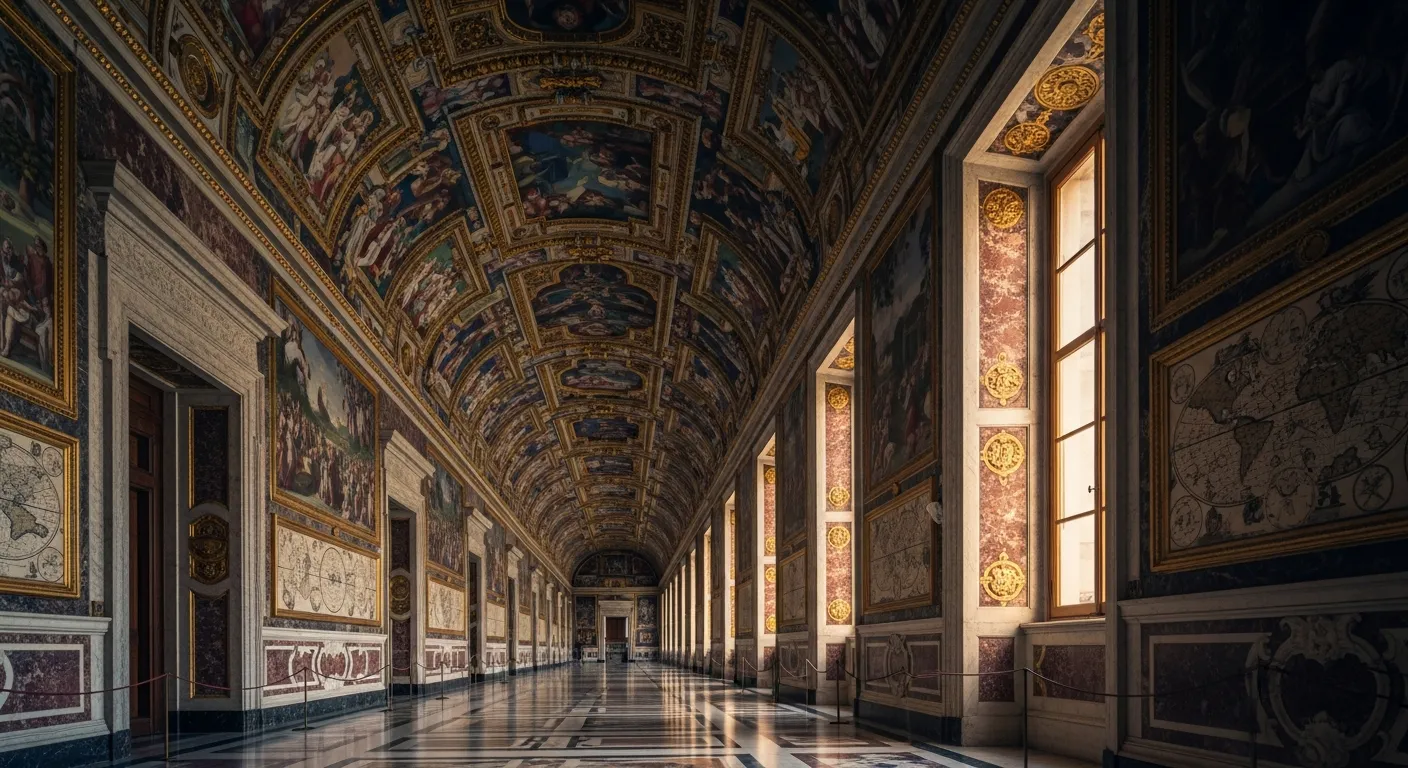
The Gallery of Maps and Gallery of Tapestries function as processional spaces leading toward the chapel, lined with sixteenth-century cartography of Italian regions and Flemish weaving based on Raphael cartoons. Modern art holdings in the Collection of Contemporary Art surprise visitors expecting only Old Masters, with works donated to recent popes including Matisse, Chagall, and Francis Bacon among twentieth-century highlights. The ethnological museum and Egyptian collection are often skipped on rushed tours but offer quieter study of global material culture collected during missionary and diplomatic encounters worldwide. The Pinacoteca painting gallery presents Leonardo's unfinished St Jerome and Caravaggio's Deposition alongside Raphael's Transfiguration altarpiece in rooms that reward unhurried comparison of High Renaissance and Baroque technique. Gregorian Egyptian Museum mummy cases and Mesopotamian cylinders provide archaeological depth parallel to Rome's classical focus.
Photography and speaking are prohibited in the Sistine Chapel, rules enforced by guards despite widespread violations that can result in public reprimands echoing under the vaulted ceiling. Flash photography elsewhere can damage pigments in the Raphael Rooms and tapestries, so respect posted restrictions even when other visitors ignore them. No museum pass or Roma Pass covers Vatican entry; tickets must be purchased or reserved through official Vatican channels to avoid fraudulent third-party sellers charging inflated prices for invalid passes. Last-minute tickets occasionally appear on the official site due to cancellations, worth checking seventy-two hours before travel. The Vatican Museums remain a working papal institution, so closures for conclaves or diplomatic events can occur with short notice despite confirmed tickets.
Wing-by-wing visitor guide
Focused routes for Vatican Museums — pick one wing per visit to avoid museum fatigue.
Raphael Rooms and Stanze
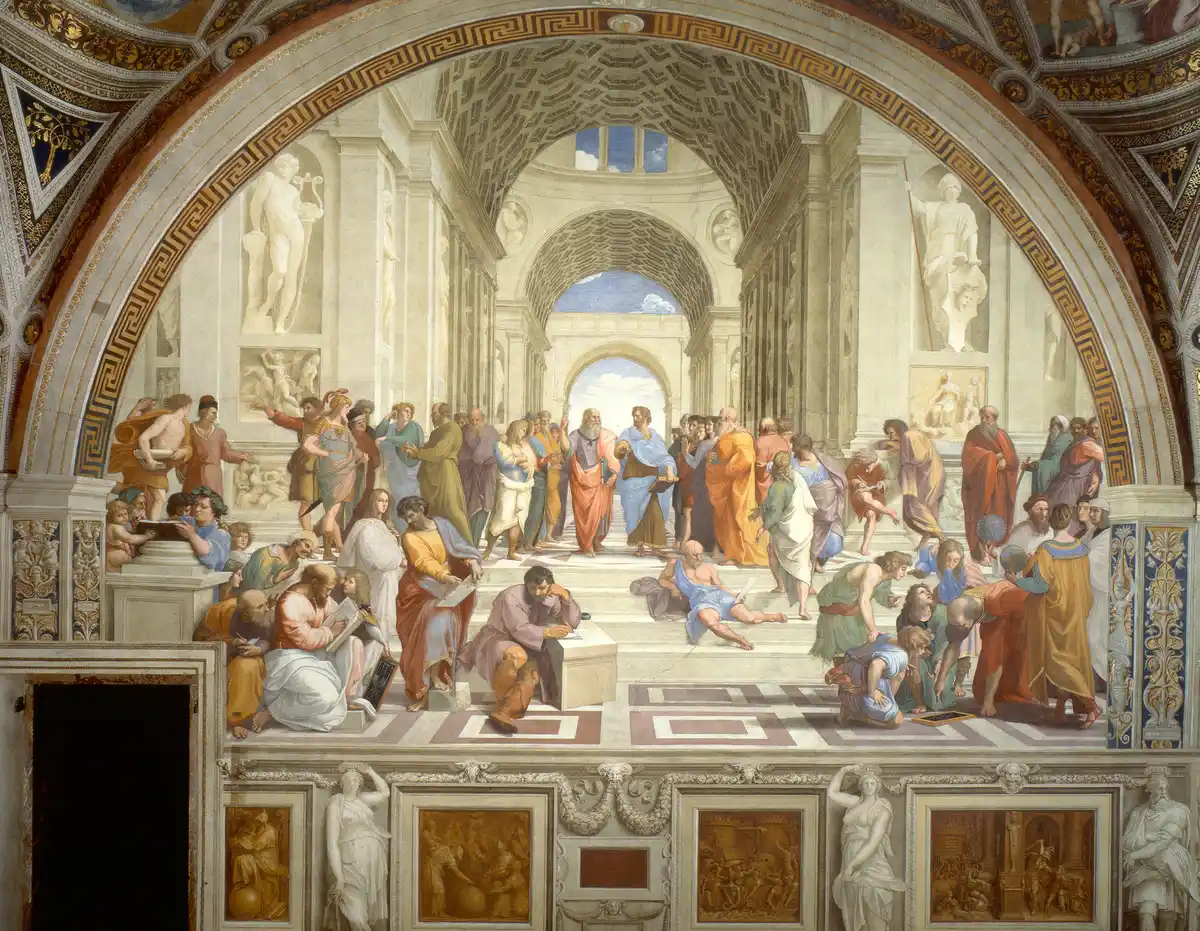
⏱ 45 minutesFour papal chambers painted by Raphael and his workshop form the High Renaissance heart of the museum route. The School of Athens in the Stanza della Segnatura is among the most influential fresco cycles ever created.
- • School of Athens with Plato and Aristotle at center
- • Disputation of the Holy Sacrament theology ceiling
- • Fire in the Borgo and other papal history scenes
- • Raphael's portrait figures including Michelangelo as Heraclitus
- • Restoration-sensitive viewing — no flash photography
Pio-Clementino Museum
⏱ 60 minutesThis classical sculpture museum occupies a sequence of papal villas and courtyards, showcasing Roman copies of Greek masterpieces alongside original antiquities. The Belvedere Torso influenced Michelangelo's figure style throughout the Sistine Chapel.
- • Laocoön and His Sons marble group
- • Apollo Belvedere in the Octagonal Court
- • Belvedere Torso — truncated Hellenistic masterpiece
- • Rotunda with porphyry basin and golden ceiling
- • Greek and Roman portraiture galleries
Sistine Chapel and Final Route
⏱ 40 minutesThe chapel concludes the standard visitor route and requires silent, photo-free observation despite its crowded floor. Ceiling panels narrate Genesis from Creation to the Flood, while The Last Judgment covers the altar wall.
- • Creation of Adam central ceiling panel
- • Prophets and sibyls along ceiling borders
- • The Last Judgment on the west wall
- • Perugino and Botticelli side wall frescoes
- • Direct exit option to St Peter's Basilica when open
How long do you need at Vatican Museums?
Allow 3–4 hours. A focused route through 4 must-see highlights at Vatican Museums without museum fatigue. Follow the stops in order:
- 1
Sistine Chapel Ceiling
📍 Sistine Chapel
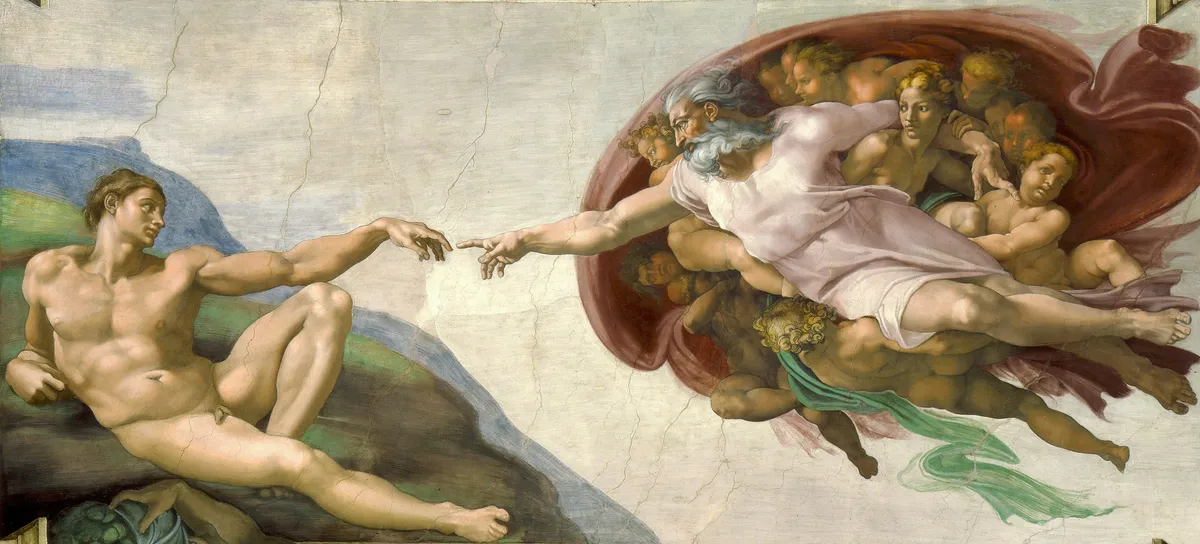
Painted on commission from Pope Julius II, Michelangelo worked lying on scaffolding for four years to create 1,100 square metres of frescoes depicting scenes from Genesis, including The Creation of Adam.
- 2
The Last Judgement
📍 Sistine Chapel (altar wall)
Painted 25 years after the ceiling, The Last Judgement fills the entire altar wall.
- 3
Laocoön and His Sons
📍 Cortile Ottagono
A masterpiece of Hellenistic sculpture depicting the Trojan priest Laocoön and his two sons being attacked by sea serpents.
- 4
Raphael Rooms (Stanze di Raffaello)
📍 Raphael Rooms (4 rooms)
A suite of four rooms painted by Raphael and his workshop, including the famous School of Athens — a fresco depicting the great philosophers of antiquity gathered beneath a classical arch.
What are the must-see works at Vatican Museums?
4 highlights that define the collection: Sistine Chapel Ceiling, The Last Judgement, Laocoön and His Sons and more.
Sistine Chapel Ceiling
Michelangelo · 1508–1512
📍 Sistine Chapel
Painted on commission from Pope Julius II, Michelangelo worked lying on scaffolding for four years to create 1,100 square metres of frescoes depicting scenes from Genesis, including The Creation of Adam.
The Last Judgement
Michelangelo · 1536–1541
📍 Sistine Chapel (altar wall)
Painted 25 years after the ceiling, The Last Judgement fills the entire altar wall. Its swirling mass of over 300 figures — including a self-portrait of Michelangelo as the flayed St Bartholomew — was considered shocking in its day.
Laocoön and His Sons
Hagesander, Athenodoros, Polydorus · c. 40–30 BCE
📍 Cortile Ottagono
A masterpiece of Hellenistic sculpture depicting the Trojan priest Laocoön and his two sons being attacked by sea serpents. Discovered in Rome in 1506, it so impressed Michelangelo that it influenced his artistic development profoundly.
Raphael Rooms (Stanze di Raffaello)
Raphael · 1509–1524
📍 Raphael Rooms (4 rooms)
A suite of four rooms painted by Raphael and his workshop, including the famous School of Athens — a fresco depicting the great philosophers of antiquity gathered beneath a classical arch.
Collections and highlights
- • The Sistine Chapel
- • Raphael Rooms
- • Laocoön and His Sons
- • Apollo Belvedere
- • Gallery of Maps
Famous works with their own guide
How do you get to Vatican Museums?
- metro Line A to Ottaviano–San Pietro, then 10-minute walk to museum entrance
- metro Line A to Cipro–Musei Vaticani (closer to the museum entrance)
- bus Lines 23, 40, 49, 62, 98 to Piazza del Risorgimento (museum entrance side)
- walk 30-minute walk from central Rome or from Piazza Navona
Address: Viale Vaticano, 00165 Roma RM, Italy
Vatican Museums: frequently asked questions
Do I need to book Vatican Museums tickets in advance?
Yes — advance booking is strongly recommended, particularly between March and October. The Vatican Museums receive over 6 million visitors per year. On-the-day queues at the main entrance can exceed 2–3 hours. Book on the official Vatican Museums website (museivaticani.va) with a timed entry slot.
What is painted on the Sistine Chapel ceiling?
Michelangelo painted the Sistine Chapel ceiling between 1508 and 1512, commissioned by Pope Julius II. The ceiling depicts nine scenes from the Book of Genesis, including the famous Creation of Adam — in which God's and Adam's fingers nearly touch. Other scenes include the Creation of Eve, the Fall of Man, and the story of Noah. The lunettes and spandrels around the edges depict ancestors of Christ and prophets. Michelangelo painted the entire ceiling lying on his back on specially constructed scaffolding.
What is the Last Judgment in the Sistine Chapel?
The Last Judgment is a fresco painted by Michelangelo on the altar wall of the Sistine Chapel, completed in 1541 — nearly 30 years after the ceiling. It depicts the Second Coming of Christ and the judgment of souls: the saved ascending to heaven on the left, the damned descending to hell on the right. Michelangelo famously included a self-portrait as the flayed skin of Saint Bartholomew, held by the saint in the centre of the composition.
Is photography allowed in the Sistine Chapel?
Photography is officially prohibited inside the Sistine Chapel, and guards will ask you to stop. Photography and video are permitted in most other areas of the Vatican Museums. The prohibition exists for preservation reasons (flash photography can damage pigments) and to maintain a respectful atmosphere.
Is there a dress code for the Vatican Museums?
Yes — shoulders and knees must be covered to enter the Vatican Museums and the Sistine Chapel. Sleeveless tops, shorts, and short skirts are not permitted. The rule is strictly enforced. Scarves are sold outside the entrance for those who are underprepared.
How long does it take to visit the Vatican Museums and Sistine Chapel?
A standard visit through the Vatican Museums to the Sistine Chapel takes 2.5–3 hours if you follow the main route. This includes the Gallery of Maps, the Raphael Rooms, and the Sistine Chapel. A thorough visit covering more galleries takes 4–5 hours. The route is largely one-directional and most visitors cannot exit before the Sistine Chapel without backtracking.
What are Vatican Museums's opening hours?
Vatican Museums is open Monday to Saturday: 8:00 AM – 8:00 PM (last entry 6:00 PM); last Sunday of the month: 9:00 AM – 2:00 PM, and closed other Sundays and Vatican holidays. Last entry: 6:00 PM (12:30 PM on free Sundays). Hours can change for holidays and events, so check the official website before you go.
Is Vatican Museums free to visit?
Not for everyone. Standard admission: €20 at the ticket office; €25 booked online (includes €5 booking fee). Free or reduced entry: Last Sunday of each month free, 9 AM – 2 PM (except when it falls on Easter, 29 June or 25/26/31 December); Children under 7 free; Disabled visitors + companion free (tickets on site).