Uffizi Gallery
Quick answer
Uffizi Gallery in Florence, Italy — the Uffizi Gallery is a prominent art museum located adjacent to the Piazza della Signoria in the Historic Centre of Florence in the region of Tuscany, Italy. Open Tuesday to Sunday: 8:15 AM – 6:30 PM; closed Mondays. Admission: €25 on the day; €29 booked in advance (includes reservation); €16 for entry from 4 PM. Allow 2–4 hours and book a timed ticket ahead.
Visitor information last reviewed 25 September 2026. Check the official museum site for current details.
Uffizi Gallery at a glance: hours, tickets and time needed
| Opening hours | Tuesday to Sunday: 8:15 AM – 6:30 PM |
|---|---|
| Closed | Mondays, 1 January and 25 December |
| Last entry | 5:30 PM (ticket office closes) |
| Admission | €25 on the day; €29 booked in advance (includes reservation); €16 for entry from 4 PM |
| Free or reduced entry | First Sunday of each month free (no reservations) · Under 18 free (any nationality) · Disabled visitors + 1 companion free · EU citizens aged 18–25: €2 reduced ticket |
| Booking | Book a timed ticket in advance — peak slots sell out |
| Time needed | 2–4 hours |
| Best time to visit | Book the earliest available time slot (8:15 AM) to experience the most important galleries before the main crowd arrives. |
| Getting there | Walk: In the historic centre — 5-minute walk from the Duomo, 2 minutes from Ponte Vecchio |
| Address | Piazzale degli Uffizi, 6, 50122 Firenze FI, Italy |
| Official website | uffizi.it |
Checked 2026-09-25 against the official website. Prices and hours change — confirm before you travel.
What is Uffizi Gallery known for?
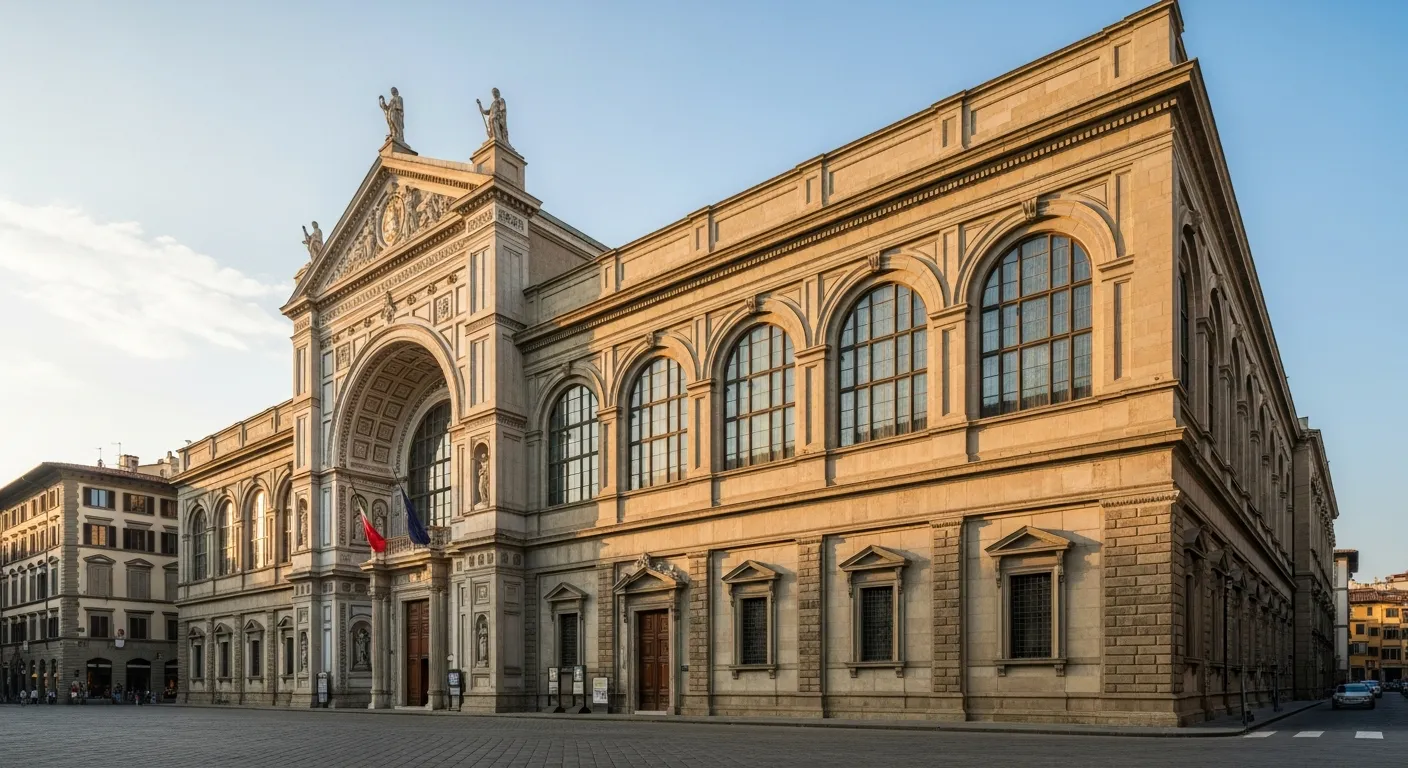
The Uffizi Gallery is a prominent art museum located adjacent to the Piazza della Signoria in the Historic Centre of Florence in the region of Tuscany, Italy. One of the most important Italian museums and the most visited, it is also one of the largest and best known in the world.
It holds a collection of priceless works, particularly from the period of the Italian Renaissance.
After the ruling house of Medici died out, their art collections were gifted to the city of Florence under the famous Patto di famiglia negotiated by Anna Maria Luisa, the last Medici heiress. The Uffizi is one of the first modern museums.
The gallery had been open to visitors by request since the sixteenth century, and in 1765 it was officially opened to the public, formally becoming a museum in 1865.
Best for: Art Lovers · History Enthusiasts · First-timers
Florence's Renaissance Treasury
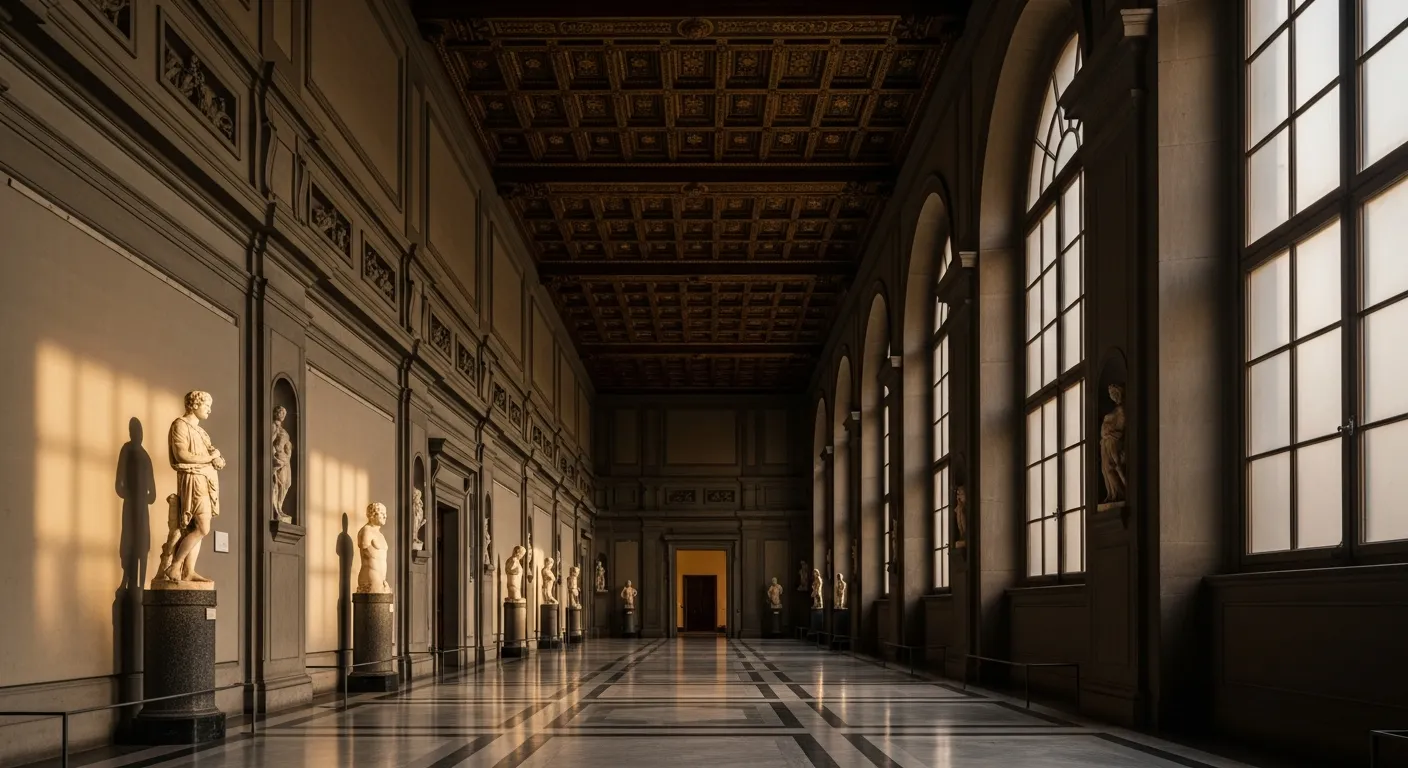
The Uffizi Gallery occupies a sixteenth-century administrative palace designed by Giorgio Vasari, linking the Palazzo Vecchio to the Arno River through a elevated corridor. Timed entry reservations are mandatory and should be booked weeks ahead for spring and summer visits. The one-way route through second-floor galleries can feel crowded at Botticelli and Leonardo rooms regardless of season. The Vasari Corridor historically connected Palazzo Vecchio to Pitti Palace but reopens periodically for guided tours only. Corridor windows overlooking the Arno appear in many gallery rooms along the Uffizi's long rectangular building. Firenze Card and combined Pitti tickets can reduce costs for multi-day Renaissance itineraries. Giorgio Vasari designed the Uffizi building as Medici administrative offices before galleries transformed the upper floors into Europe's first modern museum. Combined Accademia and Uffizi tickets help structure a two-museum Florence day when timed slots align across both institutions.
Early morning slots offer the best chance to view Birth of Venus without a wall of phones. The Uffizi combined ticket options with Pitti Palace and Boboli Gardens reward multi-day Florence stays. Identification matching ticket names is enforced at turnstiles. The Uffizi terrace bar offers espresso with Duomo views during permitted break times. Copyists with easels still work in some galleries under museum license, continuing Renaissance workshop tradition. Online virtual tours preview room layouts but cannot replace seeing Botticelli scale in person. The Vasari Corridor historically connected Palazzo Vecchio to Pitti Palace but reopens periodically for guided tours only. Corridor windows overlooking the Arno appear in many gallery rooms along the Uffizi's long rectangular building. Timed entry tickets enforce capacity limits, but corridor bottlenecks still form at Botticelli rooms regardless of season or reservation slot.
Air conditioning and windows are limited in historic rooms, making summer afternoons warm. The rooftop café provides Arno views during breaks. Plan three hours minimum for Renaissance highlights, five if including Mannerist and Baroque upper corridors thoroughly. Firenze Card and combined Pitti tickets can reduce costs for multi-day Renaissance itineraries. The Uffizi terrace bar offers espresso with Duomo views during permitted break times. Copyists with easels still work in some galleries under museum license, continuing Renaissance workshop tradition. Online virtual tours preview room layouts but cannot replace seeing Botticelli scale in person. Arno River views from gallery windows appear throughout the long rectangular building, offering natural breaks between intense Renaissance concentration. Firenze Card holders still require reserved entry slots at peak season despite discounted admission pricing benefits.
The Birth of Renaissance Painting
Medici patronage assembled the core collection, prioritizing Florentine, Sienese, and later pan-Italian masterpieces. Giotto and Cimabue panels document the transition from medieval gold ground to naturalistic space. Botticelli's Primavera and Birth of Venus remain the most reproduced images of the Italian Renaissance worldwide. Copyists with museum easels continue a Renaissance workshop tradition visible in select galleries during weekday mornings.
Leonardo's Annunciation and Raphael's Madonna of the Goldfinch demonstrate youthful genius before Roman commissions. Titian, Caravaggio, and Artemisia Gentileschi extend the narrative into Venetian color and Baroque drama on the gallery's outer wings. The Vasari Corridor, historically connecting to Pitti Palace, reopens periodically for guided groups after long closure. Leonardo Annunciation and Raphael Madonna of the Goldfinch represent youthful masterpieces before both artists departed Florence for broader careers. Medici collection provenance labels explain how grand ducal patronage assembled the core holdings visitors see today.
German and Flemish works including Dürer and Rembrandt appear in dedicated rooms often overlooked by rush tours. Temporary exhibitions in the ground-floor Aula Magliabechiana require separate tickets but contextualize permanent holdings. The Uffizi's digital archive publishes high-resolution images supporting academic study worldwide. Caravaggio Medusa shield and Bacchus on outer wings demonstrate Baroque naturalism that contrasts sharply with earlier Renaissance idealization. Online virtual tours preview room sequences but cannot convey the scale of Botticelli figures viewed in person.
Florence Booking Essentials
Uffizi tickets sell out weeks ahead in summer — book the earliest slot and head straight to Room 10–14 (Botticelli) before corridors fill. The Vasari Corridor ticket is separate and sells out faster than general admission when open for special tours.
The rooftop terrace café offers Arno views worth the premium coffee price as a mid-visit break. Avoid Tuesday when many Florentine museums coordinate closures — verify combined schedules if pairing with Accademia or Bargello same day.
Wing-by-wing visitor guide
Focused routes for Uffizi Gallery — pick one wing per visit to avoid museum fatigue.
Early Renaissance (Rooms 1–7)
⏱ 45 minutesTrecento and early Quattrocento panels trace painting's evolution from Byzantine influence toward linear perspective. Giotto's Ognissanti Madonna and works by Cimabue and Duccio open the chronological sequence. Birth of Venus and Primavera in adjacent rooms draw the heaviest photography traffic anywhere in the museum throughout operating hours.
- • Giotto Ognissanti Madonna
- • Cimabue and Duccio medieval panels
- • Gentile da Fabriano Adoration of the Magi
- • Masaccio and Masolino collaborative works
- • Paolo Uccello battle and perspective experiments
Botticelli Corridor (Rooms 10–14)
⏱ 40 minutesSandro Botticelli dominates these rooms with mythological and devotional masterpieces commissioned by Medici patrons. Expect the heaviest crowds anywhere in the museum around Birth of Venus and Primavera. Michelangelo Doni Tondo round painting demonstrates sculptural figure treatment transferred to oil on panel at the High Renaissance apex.
- • Birth of Venus iconic shell scene
- • Primavera allegorical garden
- • Calumny of Apelles narrative
- • Madonna of the Magnificat tondo
- • Filippino Lippi adjacent rooms
High Renaissance and Mannerism
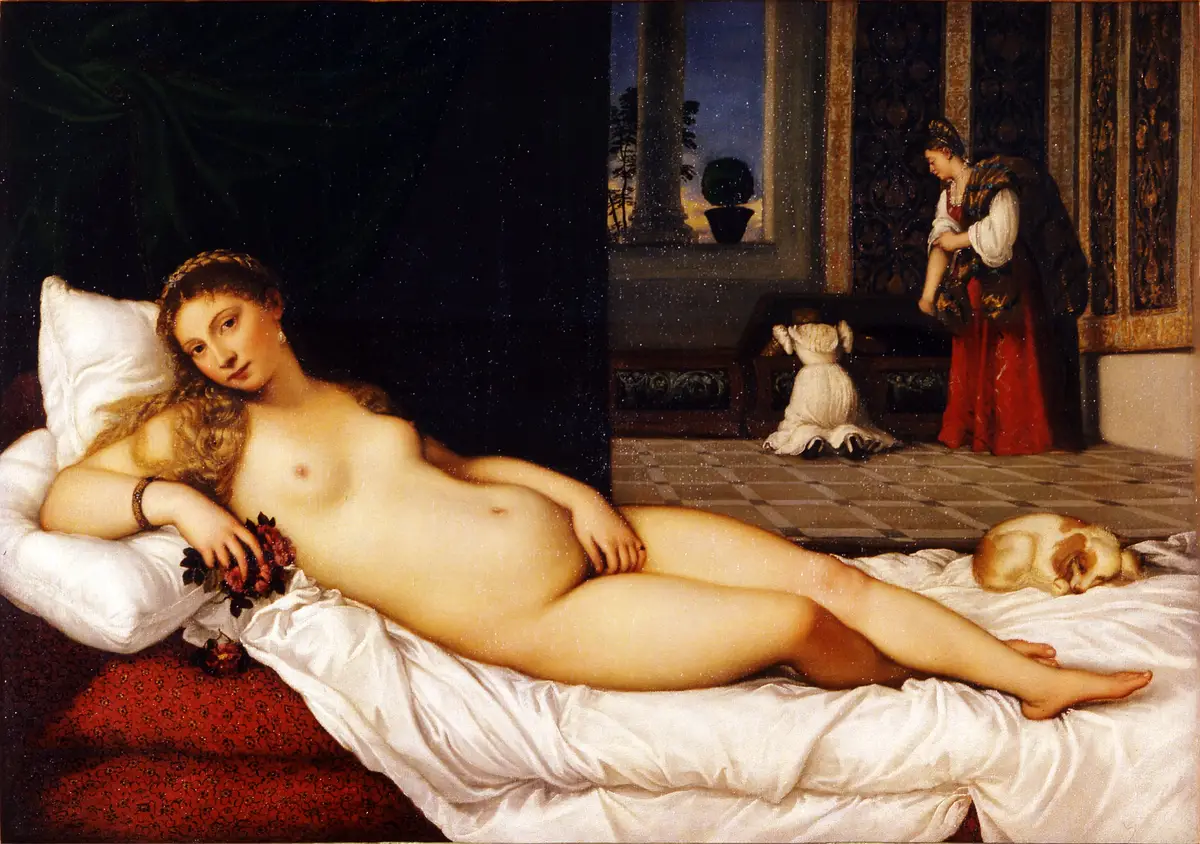
⏱ 75 minutesLeonardo, Raphael, Michelangelo, and Titian represent the apex of sixteenth-century achievement in interconnected rooms. Michelangelo's Doni Tondo round painting demonstrates sculptural figure treatment in oil. Titian Venus of Urbino and Caravaggio works on outer wings reward visitors who continue beyond the most famous Botticelli corridor.
- • Leonardo Annunciation detail study
- • Raphael Madonna of the Goldfinch
- • Michelangelo Doni Tondo Holy Family
- • Titian Venus of Urbino
- • Caravaggio Medusa shield and Bacchus
How long do you need at Uffizi Gallery?
Allow 2–4 hours. A focused route through 5 must-see highlights at Uffizi Gallery without museum fatigue. Follow the stops in order:
- 1
The Birth of Venus
📍 Room 10–14, Botticelli Rooms
Botticelli's iconic depiction of Venus emerging from the sea on a giant shell.
- 2
Primavera (Spring)
📍 Room 10–14, Botticelli Rooms
A complex allegorical painting featuring nine mythological figures in an orange grove.
- 3
Annunciation
📍 Room 35
One of Leonardo's earliest surviving works, painted when he was still in Verrocchio's workshop.
- 4
Portrait of Federico da Montefeltro and Battista Sforza
📍 Room 8
A stunning diptych portrait of the Duke and Duchess of Urbino in profile against panoramic Umbrian landscapes.
- 5
Tondo Doni
📍 Room 41
The only completed easel painting by Michelangelo — a circular (tondo) panel depicting the Holy Family.
What are the must-see works at Uffizi Gallery?
5 highlights that define the collection: The Birth of Venus, Primavera (Spring), Annunciation and more.
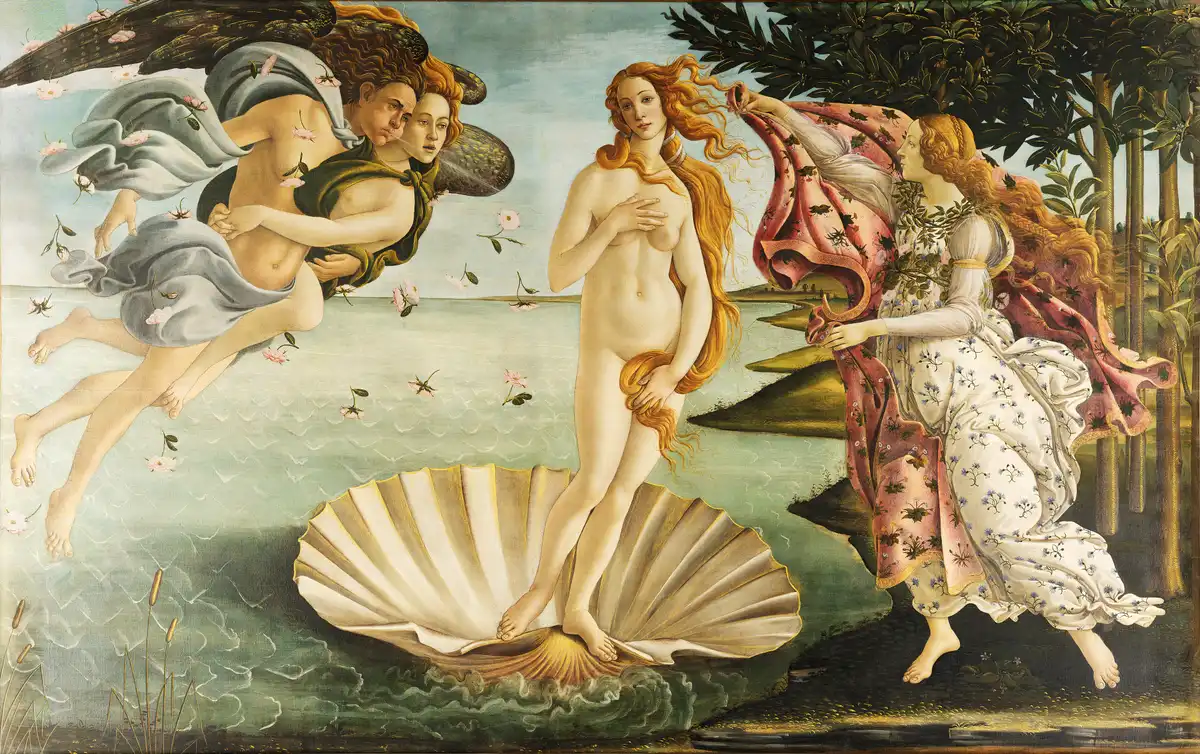
The Birth of Venus
Sandro Botticelli · c. 1484–1486
📍 Room 10–14, Botticelli Rooms
Botticelli's iconic depiction of Venus emerging from the sea on a giant shell. Painted for Lorenzo di Pierfrancesco de' Medici, it is among the most recognisable images in Western art and a defining work of the Italian Renaissance.
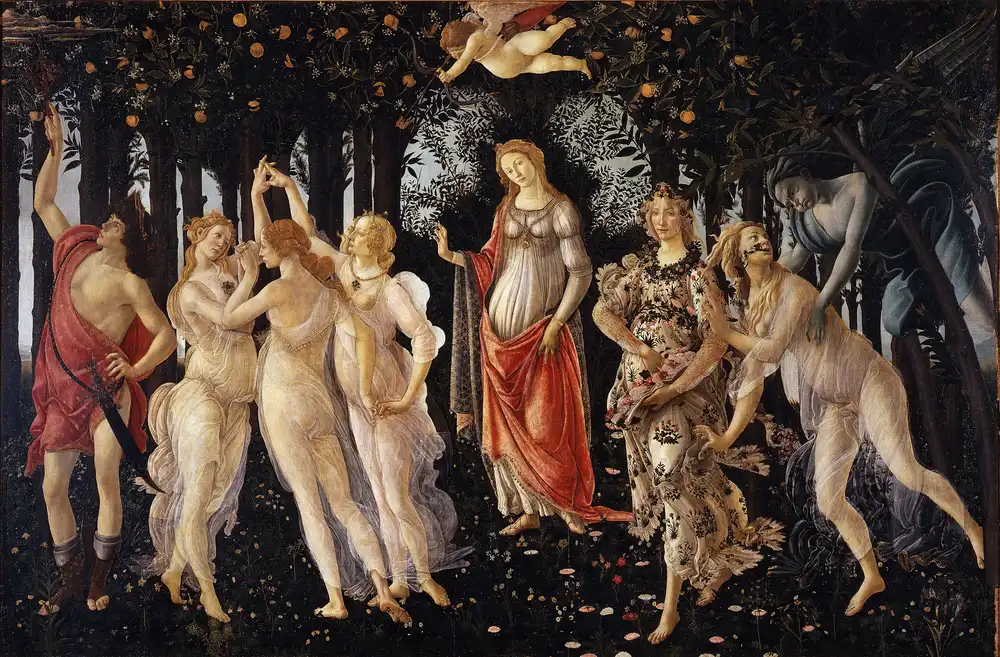
Primavera (Spring)
Sandro Botticelli · c. 1477–1482
📍 Room 10–14, Botticelli Rooms
A complex allegorical painting featuring nine mythological figures in an orange grove. The exact meaning has been debated for centuries. It hangs alongside The Birth of Venus, the two forming one of art history's greatest pairings.
Annunciation
Leonardo da Vinci · c. 1472–1475
📍 Room 35
One of Leonardo's earliest surviving works, painted when he was still in Verrocchio's workshop. The meticulous botanical detail of the flowers and the luminous landscape already signal Leonardo's scientific curiosity.
Portrait of Federico da Montefeltro and Battista Sforza
Piero della Francesca · c. 1472–1474
📍 Room 8
A stunning diptych portrait of the Duke and Duchess of Urbino in profile against panoramic Umbrian landscapes. A masterpiece of early Renaissance portraiture and a key document of 15th-century court culture.
Tondo Doni
Michelangelo · c. 1504–1506
📍 Room 41
The only completed easel painting by Michelangelo — a circular (tondo) panel depicting the Holy Family. Its sculptural figures, intense colours, and complex composition make it a bridge between the Renaissance and Mannerism.
Collections and highlights
- • The Birth of Venus by Sandro Botticelli
- • Primavera by Sandro Botticelli
- • Annunciation by Leonardo da Vinci
- • Medusa by Caravaggio
- • Doni Tondo by Michelangelo
Famous works with their own guide
Tips for visiting Uffizi Gallery
- 1.
Best time to visit
Book the earliest available time slot (8:15 AM) to experience the most important galleries before the main crowd arrives. Avoid Tuesdays — when other Florentine museums are closed and visitor numbers spike at the Uffizi.
- 2.
Tickets & booking
Advance booking is essential — walk-up queues can exceed 3 hours in summer. Book directly via the official Uffizi website or through the Firenze Card (which covers multiple Florentine museums).
- 3.
Accessibility
The historic building has some accessibility limitations. Elevators connect the main floors. Contact the museum directly in advance to plan a fully accessible route. Wheelchair loan available at the entrance.
- 4.
Photography rules
Photography for personal use is permitted throughout the permanent collection without flash. Tripods and monopods are not permitted. Temporary exhibitions often prohibit photography entirely.
How do you get to Uffizi Gallery?
- walk In the historic centre — 5-minute walk from the Duomo, 2 minutes from Ponte Vecchio
- bus ATAF line C3 (minibus) stops near Piazza della Signoria, 2-minute walk
- train Florence SMN station (Santa Maria Novella) — 15-minute walk through the historic centre
Address: Piazzale degli Uffizi, 6, 50122 Firenze FI, Italy
Uffizi Gallery: frequently asked questions
What is Botticelli's Birth of Venus and why is it famous?
The Birth of Venus (c. 1484–1486) is a large tempera painting depicting the goddess Venus emerging from the sea as a fully grown woman, blown to shore by the wind gods Zephyrus and Aura. Painted for the Medici family, it was one of the first large-scale non-religious nude paintings in Western art since antiquity. It is in Room 10–14 of the Uffizi, displayed alongside its companion work, Primavera (Spring), another of Botticelli's most famous paintings.
Do I need to book Uffizi tickets in advance?
Yes — advance booking is strongly recommended, especially between April and October. The Uffizi is one of the most visited museums in Europe, and on-the-day tickets often sell out entirely. Book via the official Uffizi website (uffizi.it) with a timed entry slot. A small booking fee applies.
Is the Uffizi free for anyone?
Under-18s of any nationality enter free, as do disabled visitors with one companion. EU citizens aged 18–25 pay a €2 reduced ticket. Everyone enters free on the first Sunday of each month (no reservations or priority entry). Otherwise tickets cost €25 on the day, €29 booked in advance, or €16 for entry from 4 PM.
What is the Vasari Corridor?
The Vasari Corridor (Corridoio Vasariano) is a 1-kilometre elevated passage built in 1565 by Giorgio Vasari for the Medici family, connecting the Uffizi to the Palazzo Pitti across the Arno. It passes over the Ponte Vecchio and was used by the Medici to move between their residences without mixing with the public. The corridor houses an important collection of self-portraits. It reopened to the public in 2021 after a long renovation; access is by timed guided tour only.
How long does a visit to the Uffizi take?
The Uffizi is large — 45 rooms across three floors — but the layout is linear and manageable. A visit focused on the main highlights (Botticelli, Leonardo, Raphael, Michelangelo, Caravaggio, and Titian) takes 2–3 hours. A thorough visit covering the full collection takes 4–5 hours.
How long should I spend at Uffizi Gallery?
Plan 2–4 hours for the highlights of Uffizi Gallery. Our 5-stop route — The Birth of Venus, Primavera (Spring), Annunciation and more — is designed to fit that time. Add extra time for temporary exhibitions, the shop and the café.
Is Uffizi Gallery open on Mondays?
No — Uffizi Gallery is closed every Monday (closing days: Mondays, 1 January and 25 December). It is open Tuesday to Sunday: 8:15 AM – 6:30 PM. Plan a different museum for that day, and check the official website for holiday changes.
What are Uffizi Gallery's opening hours?
Uffizi Gallery is open Tuesday to Sunday: 8:15 AM – 6:30 PM, and closed Mondays, 1 January and 25 December. Last entry: 5:30 PM (ticket office closes). Hours can change for holidays and events, so check the official website before you go.