Tokyo National Museum
Quick answer
Tokyo National Museum in Tokyo, Japan — the Tokyo National Museum is an art museum in Ueno Park in the Taitō ward of Tokyo, Japan. Open Tuesday to Sunday: 9:30 AM – 5:00 PM; closed Mondays. Admission: 1000 JPY standard admission. Allow 2–4 hours.
Visitor information last reviewed 30 June 2026. Check the official museum site for current details.
Tokyo National Museum at a glance: hours, tickets and time needed
| Opening hours | Tuesday to Sunday: 9:30 AM – 5:00 PM |
|---|---|
| Closed | Mondays |
| Admission | 1000 JPY standard admission |
| Free or reduced entry | Under 18 free on weekends · Museum Day (late September) free · Permanent collection free some dates — check website |
| Booking | Tickets usually available on the day |
| Time needed | 2–4 hours |
| Best time to visit | Tuesday or Wednesday at 9:30 AM opening — Honkan is quiet before school groups arrive. |
| Getting there | Metro: Ueno Station (JR Yamanote, Ginza and Hibiya Lines) — 10-minute walk through Ueno Park |
| Address | 13-9 Uenokoen, Taito City, Tokyo 110-8712, Japan |
| Official website | tnm.jp |
Checked 2026-06-30 against the official website. Prices and hours change — confirm before you travel.
What is Tokyo National Museum known for?
The Tokyo National Museum in Ueno Park is the oldest and largest art museum in Japan, founded in 1872. It holds over 110,000 objects including 89 Japanese National Treasures — the largest single collection of such objects in Japan.
The complex consists of six main buildings: the Honkan (Japanese Gallery), Toyokan (Asian Gallery), Heiseikan (Japanese Archaeology), Hyokeikan (special exhibitions), Hōryū-ji Hōmotsukan (Hōryū-ji Treasures), and the Gallery of Horyu-ji Treasures.
The Honkan's Pine Trees screen by Hasegawa Tōhaku, samurai armour, ukiyo-e prints by Hokusai and Hiroshige, and the Hōryū-ji Treasures from one of Japan's oldest Buddhist temples are essential highlights.
Ueno Park also contains the National Museum of Nature and Science, the National Museum of Western Art, and Ueno Zoo — one of the greatest museum quarters in Asia.
Best for: Art Lovers · History Enthusiasts · First-Time Visitors to Tokyo
How long do you need at Tokyo National Museum?
Allow 2–4 hours. A focused route through 4 must-see highlights at Tokyo National Museum without museum fatigue. Follow the stops in order:
- 1
Pine Trees (Shōrin-zu byōbu)
📍 Honkan, Room 3 (rotation)
One of Japan's most celebrated ink paintings — misty pine trees rendered in spare, atmospheric brushwork on a pair of folding screens.
- 2
Haniwa Warrior
📍 Honkan, Room 1
A terracotta ritual figure from a burial mound — the hollow cylindrical body and expressive face are iconic images of early Japanese culture.
- 3
Shigisan Engi Emaki
📍 Honkan, Room 3
A three-scroll narrative painting depicting miracles at Chōgosonshi-ji temple — a masterpiece of Japanese emakimono handscroll painting.
- 4
Hōryū-ji Treasures
📍 Hōryū-ji Hōmotsukan
Objects donated by Hōryū-ji — Japan's oldest Buddhist temple — including the Kudara Kannon statue and ancient textiles.
What are the must-see works at Tokyo National Museum?
4 highlights that define the collection: Pine Trees (Shōrin-zu byōbu), Haniwa Warrior, Shigisan Engi Emaki and more.
Pine Trees (Shōrin-zu byōbu)
Hasegawa Tōhaku · c. 1595
📍 Honkan, Room 3 (rotation)
One of Japan's most celebrated ink paintings — misty pine trees rendered in spare, atmospheric brushwork on a pair of folding screens.
Haniwa Warrior
Kofun Period craftsmen · 5th–6th century
📍 Honkan, Room 1
A terracotta ritual figure from a burial mound — the hollow cylindrical body and expressive face are iconic images of early Japanese culture.
Shigisan Engi Emaki
Unknown Heian artist · 12th century
📍 Honkan, Room 3
A three-scroll narrative painting depicting miracles at Chōgosonshi-ji temple — a masterpiece of Japanese emakimono handscroll painting.
Hōryū-ji Treasures
Asuka and Nara period · 7th–8th century
📍 Hōryū-ji Hōmotsukan
Objects donated by Hōryū-ji — Japan's oldest Buddhist temple — including the Kudara Kannon statue and ancient textiles.
Collections and highlights
- • Pine Trees screen by Hasegawa Tōhaku
- • Samurai armour and swords
- • Ukiyo-e woodblock prints
- • Ancient Jōmon pottery
- • Hōryū-ji Treasures
Tips for visiting Tokyo National Museum
- 1.
Best time to visit
Tuesday or Wednesday at 9:30 AM opening — Honkan is quiet before school groups arrive.
- 2.
Crowds & busy periods
Moderate on weekends; special exhibitions in Hyokeikan draw long queues.
- 3.
Tickets & booking
¥1,000 for permanent collection; special exhibitions priced separately. Free for under-18s on weekends.
- 4.
Food & cafés nearby
Museum café; Ueno Park food stalls; Ameyoko market street (5-minute walk).
- 5.
Accessibility
Honkan and Toyokan accessible; historic Hyokeikan has limited access.
How do you get to Tokyo National Museum?
- metro Ueno Station (JR Yamanote, Ginza and Hibiya Lines) — 10-minute walk through Ueno Park
- walk Park entrance directly from Ueno Station — follow signs to Tokyo National Museum
- bus Ueno Park loop bus stops at the museum entrance
Address: 13-9 Uenokoen, Taito City, Tokyo 110-8712, Japan
Tokyo National Museum: frequently asked questions
What are Japanese National Treasures and how many does the Tokyo National Museum hold?
Japanese National Treasures (国宝, Kokuhō) are objects designated by the Japanese government as having exceptional historical or cultural significance — items so important they are considered irreplaceable to Japan. The Tokyo National Museum holds 89 National Treasures, the largest single collection of such objects in Japan. These range from Jōmon period pottery (c. 10,000–300 BCE) to medieval Buddhist sculpture, samurai swords, and Edo-period paintings and calligraphy.
What are the most famous works at the Tokyo National Museum?
The Pine Trees screen (Shōrin-zu byōbu, c. 1595) by Hasegawa Tōhaku — one of Japan's most celebrated ink paintings, depicting misty pine trees in spare, atmospheric brushwork; a complete set of samurai armour from the 12th–16th centuries in the Japanese Gallery; the Hōryū-ji Treasures collection, which houses objects from one of Japan's oldest Buddhist temples; and an extraordinary collection of ukiyo-e woodblock prints by Hiroshige, Hokusai, and Utamaro.
How many buildings does the Tokyo National Museum have?
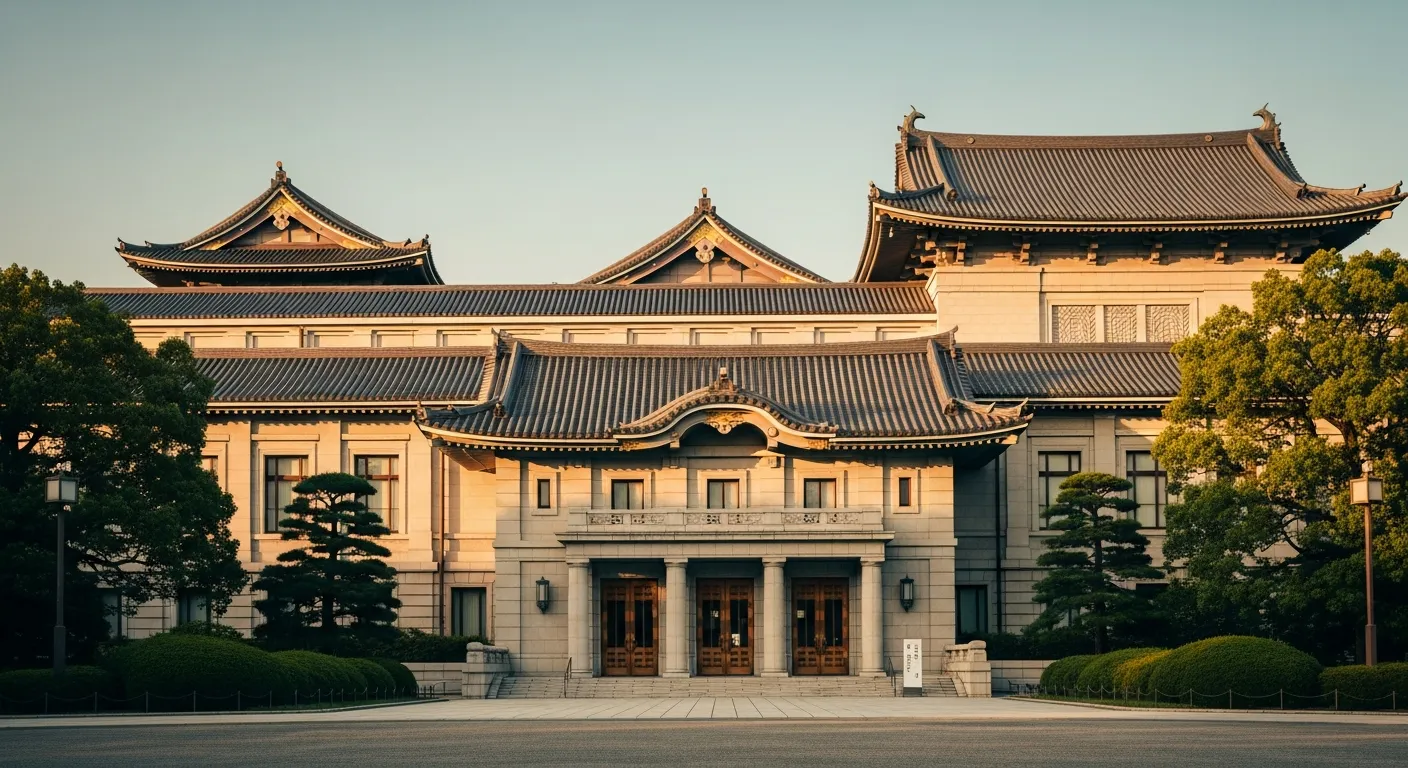
The Tokyo National Museum complex in Ueno Park consists of six main buildings: the Honkan (Japanese Gallery, the main hall — a 1938 Imperial Crown Style building); the Toyokan (Asian Gallery, featuring art from China, Korea, and South Asia); the Heiseikan (Japanese Archaeology Gallery); the Hyokeikan (temporary exhibitions); the Hōryū-ji Hōmotsukan (Hōryū-ji Treasures); and the Gallery of Horyu-ji Treasures. Each building has a distinct architectural style, from Meiji-era Western classicism to postwar modernism.
Is there English signage at the Tokyo National Museum?
Yes — the Tokyo National Museum provides English-language labels and explanatory panels in all major galleries. Free audio guides in English are available for the permanent collection. The museum also offers a free English-language highlights pamphlet at the entrance and has an English-language website and mobile-friendly map. Staff at the information desk can assist in English.
How do I get to the Tokyo National Museum?
The Tokyo National Museum is located at 13-9 Uenokoen, Taito City, in Ueno Park, Tokyo. It is a 10-minute walk from Ueno Station (JR Yamanote Line, Tokyo Metro Ginza and Hibiya Lines). Standard admission is 1,000 JPY. The museum is closed on Mondays (and the following Tuesday if Monday is a public holiday). Ueno Park also contains the National Museum of Nature and Science, the National Museum of Western Art, the Tokyo Metropolitan Museum of Art, and Ueno Zoo.
How long should I spend at Tokyo National Museum?
Plan 2–4 hours for the highlights of Tokyo National Museum. Our 4-stop route — Pine Trees (Shōrin-zu byōbu), Haniwa Warrior, Shigisan Engi Emaki and more — is designed to fit that time. Add extra time for temporary exhibitions, the shop and the café.
What are Japanese National Treasures?
Objects designated by the Japanese government as having exceptional cultural significance. The TNM holds 89 — the largest single collection in Japan.
Which building should I start with?
Start with the Honkan (Japanese Gallery) for the core collection, then the Hōryū-ji Hōmotsukan for ancient Buddhist art. Allow 2 hours for these two alone.
Is there English signage?
Yes — English labels in all major galleries, plus free English audio guides and a highlights pamphlet at the entrance.
Is Tokyo National Museum open on Mondays?
No — Tokyo National Museum is closed every Monday. It is open Tuesday to Sunday: 9:30 AM – 5:00 PM. Plan a different museum for that day, and check the official website for holiday changes.
What are Tokyo National Museum's opening hours?
Tokyo National Museum is open Tuesday to Sunday: 9:30 AM – 5:00 PM, and closed Mondays. Hours can change for holidays and events, so check the official website before you go.
Is Tokyo National Museum free to visit?
Not for everyone. Standard admission: 1000 JPY standard admission. Free or reduced entry: Under 18 free on weekends; Museum Day (late September) free; Permanent collection free some dates — check website.