Palazzo Pitti
Quick answer
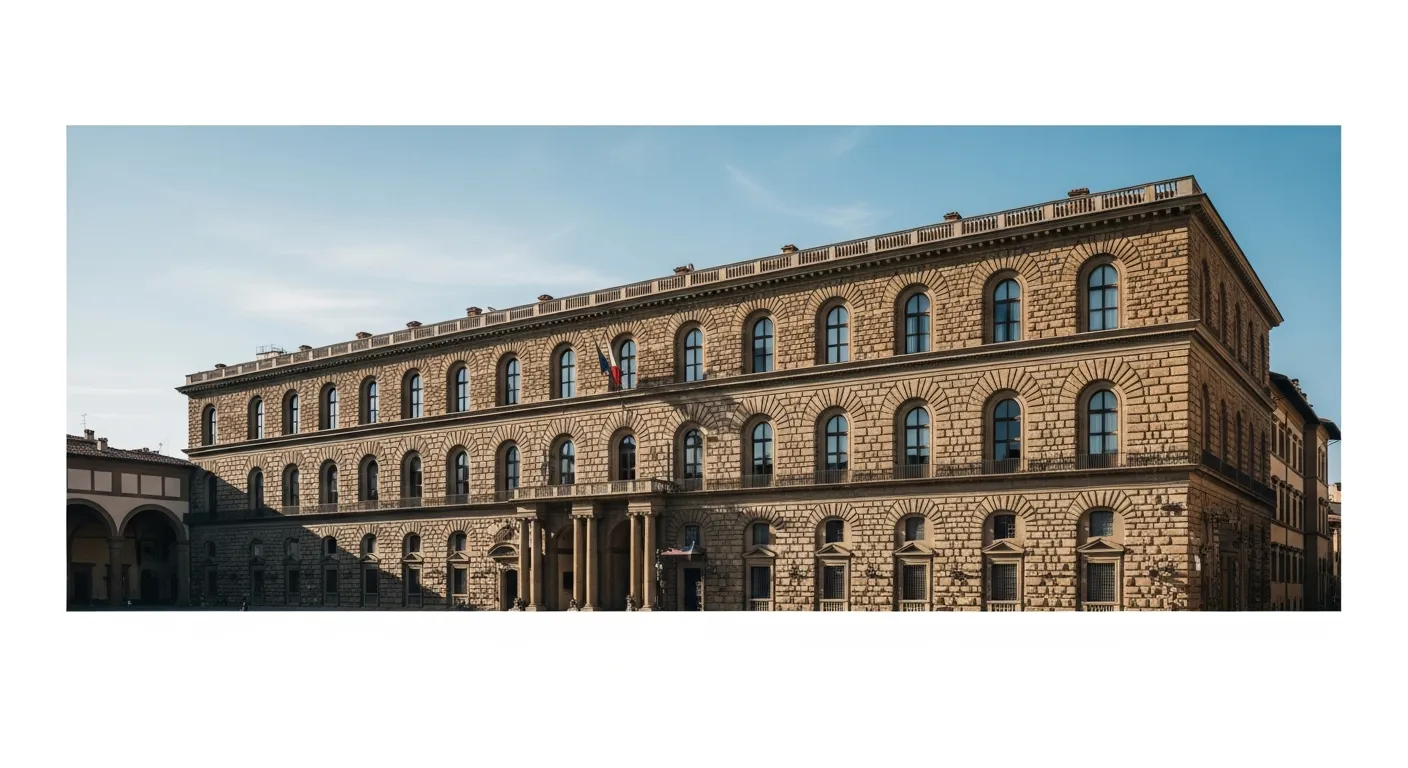
Palazzo Pitti in Florence, Italy — built in the fifteenth century for the Pitti family and acquired by the Medici in 1549, the Palazzo Pitti was the principal residence of the rulers of Tuscany. Open Tuesday to Sunday: 8:15 AM – 6:30 PM; closed Mondays. Admission: €16 standard admission. Allow 3–4 hours and book a timed ticket ahead.
Visitor information last reviewed 30 June 2026. Check the official museum site for current details.
Palazzo Pitti at a glance: hours, tickets and time needed
| Opening hours | Tuesday to Sunday: 8:15 AM – 6:30 PM |
|---|---|
| Closed | Mondays |
| Admission | €16 standard admission |
| Booking | Book a timed ticket in advance — peak slots sell out |
| Time needed | 3–4 hours |
| Best time to visit | Tuesday or Wednesday at 8:15 AM opening — the Palatine Gallery is quiet before tour groups arrive. |
| Getting there | Walk: Cross the Ponte Vecchio from the Uffizi side — the palace is directly at the south end of the bridge (~5 minutes) |
| Address | Piazza de' Pitti, 1, 50125 Firenze FI, Italy |
| Official website | uffizi.it |
Checked 2026-06-30 against the official website. Prices and hours change — confirm before you travel.
What is Palazzo Pitti known for?
Palazzo Pitti was built in the fifteenth century for the Florentine banker Luca Pitti and acquired by the Medici in 1549, becoming the principal residence of the Grand Dukes of Tuscany. The vast Renaissance palace dwarfs its neighbours across the Arno — a deliberate statement of Medici power after they moved from the Palazzo Vecchio.
The Palatine Gallery, opened to the public in 1828, hangs paintings in the rooms where they were originally displayed — Raphael's Madonna della Seggiola and Titian's Portrait of a Gentleman among works by Rubens, Van Dyck, and Caravaggio arranged floor to ceiling in Baroque fashion.
The palace complex includes the Treasury of the Grand Dukes (Medici gems and cameos), the Gallery of Modern Art (nineteenth-century Italian painting), the Costume and Fashion Museum, and the Royal Apartments — all accessible with a single ticket.
The Boboli Gardens behind the palace are among the finest Italian Renaissance gardens in the world — terraced slopes, fountains, the Buontalenti Grotto, and an amphitheatre with views over Florence. A combined ticket with the Uffizi covers palace and gardens.
Best for: Art Lovers · History Enthusiasts · First-timers
How long do you need at Palazzo Pitti?
Allow 3–4 hours. A focused route through 5 must-see highlights at Palazzo Pitti without museum fatigue. Follow the stops in order:
- 1
Madonna della Seggiola
📍 Palatine Gallery, Room 41
Raphael's intimate tondo of the Madonna embracing the Christ Child while John the Baptist watches — painted with extraordinary tenderness and sfumato during Raphael's Roman period.
- 2
Portrait of a Gentleman (Englishman)
📍 Palatine Gallery
A psychologically penetrating portrait of an unidentified Englishman — one of Titian's finest male portraits, acquired by the Medici and hung in the palace for centuries.
- 3
The Three Ages of Man
📍 Palatine Gallery
An enigmatic pastoral scene of a young musician, a mature man, and an old monk — attributed to Giorgione and exemplifying Venetian Renaissance mystery.
- 4
Buontalenti Grotto
📍 Boboli Gardens
A Mannerist artificial cave with stalactites, shells, and frescoes — originally designed to surprise and delight Medici courtiers strolling in the Boboli Gardens.
- 5
Medici Vase
📍 Palatine Gallery
A monumental ancient Greek krater that has been in Florence since the Medici collection — one of the most celebrated classical vases in any collection.
What are the must-see works at Palazzo Pitti?
5 highlights that define the collection: Madonna della Seggiola, Portrait of a Gentleman (Englishman), The Three Ages of Man and more.
Madonna della Seggiola
Raphael · c. 1513–1514
📍 Palatine Gallery, Room 41
Raphael's intimate tondo of the Madonna embracing the Christ Child while John the Baptist watches — painted with extraordinary tenderness and sfumato during Raphael's Roman period.
Portrait of a Gentleman (Englishman)
Titian · c. 1540–1550
📍 Palatine Gallery
A psychologically penetrating portrait of an unidentified Englishman — one of Titian's finest male portraits, acquired by the Medici and hung in the palace for centuries.
The Three Ages of Man
Giorgione · c. 1500–1501
📍 Palatine Gallery
An enigmatic pastoral scene of a young musician, a mature man, and an old monk — attributed to Giorgione and exemplifying Venetian Renaissance mystery.
Buontalenti Grotto
Bernardo Buontalenti · 1583–1593
📍 Boboli Gardens
A Mannerist artificial cave with stalactites, shells, and frescoes — originally designed to surprise and delight Medici courtiers strolling in the Boboli Gardens.
Medici Vase
Athenian workshop · 1st century BCE
📍 Palatine Gallery
A monumental ancient Greek krater that has been in Florence since the Medici collection — one of the most celebrated classical vases in any collection.
Collections and highlights
- • Palatine Gallery — Raphael, Titian, Rubens, Caravaggio
- • Boboli Gardens — Renaissance terraces and fountains
- • Treasury of the Grand Dukes — Medici gems and cameos
- • Gallery of Modern Art — nineteenth-century Italian painting
- • Royal Apartments — Habsburg-Lorraine furnishings
- • Costume and Fashion Museum
- • Porcelain Museum (separate ticket)
- • Buontalenti Grotto and amphitheatre
Tips for visiting Palazzo Pitti
- 1.
Best time to visit
Tuesday or Wednesday at 8:15 AM opening — the Palatine Gallery is quiet before tour groups arrive. Boboli Gardens are best in morning light.
- 2.
Crowds & busy periods
The Palatine Gallery is less crowded than the Uffizi but popular. Boboli Gardens absorb visitors well except at the main terrace viewpoint.
- 3.
Tickets & booking
Book at uffizi.it — combined PassePartout ticket covers Uffizi, Pitti, and Boboli over 72 hours. €16 for Pitti alone; €38 combined.
- 4.
Food & cafés nearby
Café in the Boboli Gardens; Oltrarno district has excellent trattorias — Santo Spirito square is 5 minutes away.
- 5.
Accessibility
Palatine Gallery has elevator access. Boboli Gardens have steep terraces and cobblestones — challenging for wheelchairs.
How do you get to Palazzo Pitti?
- walk Cross the Ponte Vecchio from the Uffizi side — the palace is directly at the south end of the bridge (~5 minutes)
- bus Lines D and 11 to Pitti — stop directly outside the palace entrance on Piazza de' Pitti
- walk 15 minutes from Florence Santa Maria Novella station through Oltrarno district
Address: Piazza de' Pitti, 1, 50125 Firenze FI, Italy
Palazzo Pitti: frequently asked questions
Is one ticket valid for the Boboli Gardens?
The PassePartout combined ticket covers the Uffizi, Pitti, and Boboli.
How long does a visit take?
Half a day at minimum to see the palace and walk the gardens.
How long should I spend at Palazzo Pitti?
Plan 3–4 hours for the highlights of Palazzo Pitti. Our 5-stop route — Madonna della Seggiola, Portrait of a Gentleman (Englishman), The Three Ages of Man and more — is designed to fit that time. Add extra time for temporary exhibitions, the shop and the café.
What is Palazzo Pitti best known for?
Built in the fifteenth century for the Pitti family and acquired by the Medici in 1549, the Palazzo Pitti was the principal residence of the rulers of Tuscany. The Palatine Gallery opened to the public in 1828. Key highlights include Palatine Gallery — Raphael, Titian, Rubens, Caravaggio, Boboli Gardens — Renaissance terraces and fountains, Treasury of the Grand Dukes — Medici gems and cameos.
How do I get tickets for Palazzo Pitti?
Admission: €16 standard admission. Book a timed-entry ticket on the official website before you go — popular slots sell out in peak season. Official site: https://www.uffizi.it/en/pitti-palace
Can I visit Pitti Palace and the Uffizi in one day?
Yes — they are connected by the Vasari Corridor (currently open by guided tour only) and by a 5-minute walk across the Ponte Vecchio. Book morning Uffizi (2–3 hours) and afternoon Pitti plus Boboli Gardens (3–4 hours). The combined PassePartout ticket is excellent value.
Are the Boboli Gardens included in the palace ticket?
Yes — the standard Pitti Palace ticket includes the Boboli Gardens. Allow at least 1 hour for the gardens alone. The Porcelain Museum within the gardens requires a small additional fee.
How does the Palatine Gallery differ from the Uffizi?
The Uffizi is arranged chronologically by school in modern museum rooms. The Palatine Gallery hangs paintings in the Medici's private apartments — floor to ceiling, in original Baroque arrangement. It feels like visiting a royal collection rather than a museum.
Is Palazzo Pitti open on Mondays?
No — Palazzo Pitti is closed every Monday. It is open Tuesday to Sunday: 8:15 AM – 6:30 PM. Plan a different museum for that day, and check the official website for holiday changes.
What are Palazzo Pitti's opening hours?
Palazzo Pitti is open Tuesday to Sunday: 8:15 AM – 6:30 PM, and closed Mondays. Hours can change for holidays and events, so check the official website before you go.
Is Palazzo Pitti free to visit?
No — standard admission is €16 standard admission.