National Museum of Korea
Seoul · South Korea · Founded 1945
Quick answer
National Museum of Korea in Seoul, South Korea — the National Museum of Korea moved to its current Yongsan home in 2005. Open daily, 9:30 AM – 5:30 PM; Wednesday and Saturday until 9:00 PM. Admission: free admission to permanent galleries. Allow 2–3 hours.
Visitor information last reviewed 25 September 2026. Check the official museum site for current details.
National Museum of Korea at a glance: hours, tickets and time needed
| Opening hours | Daily: 9:30 AM – 5:30 PM; Wednesday and Saturday until 9:00 PM |
|---|---|
| Closed | 1 January, Seollal and Chuseok days |
| Last entry | 30 minutes before closing |
| Admission | Free admission to permanent galleries |
| Free access | Permanent galleries, Children's Museum and some special exhibitions free · Paid special exhibitions ticketed |
| Booking | Tickets usually available on the day |
| Time needed | 2–3 hours |
| Best time to visit | Wednesday or Saturday evening (open until 9 PM) for a quieter visit — or weekday mornings at the 9:30 AM opening. |
| Getting there | Metro: Ichon Station (Lines 4 and Gyeongui–Jungang) — underground passage directly to the museum |
| Address | 137 Seobinggo-ro, Yongsan-gu, Seoul, South Korea |
| Closures | Several fine-arts galleries (Buddhist sculpture, metal crafts, Buddhist painting, wood and lacquer) are closed for renovation until 28 January 2027. |
| Official website | museum.go.kr |
Checked 2026-09-25 against the official website. Prices and hours change — confirm before you travel.
What is National Museum of Korea known for?
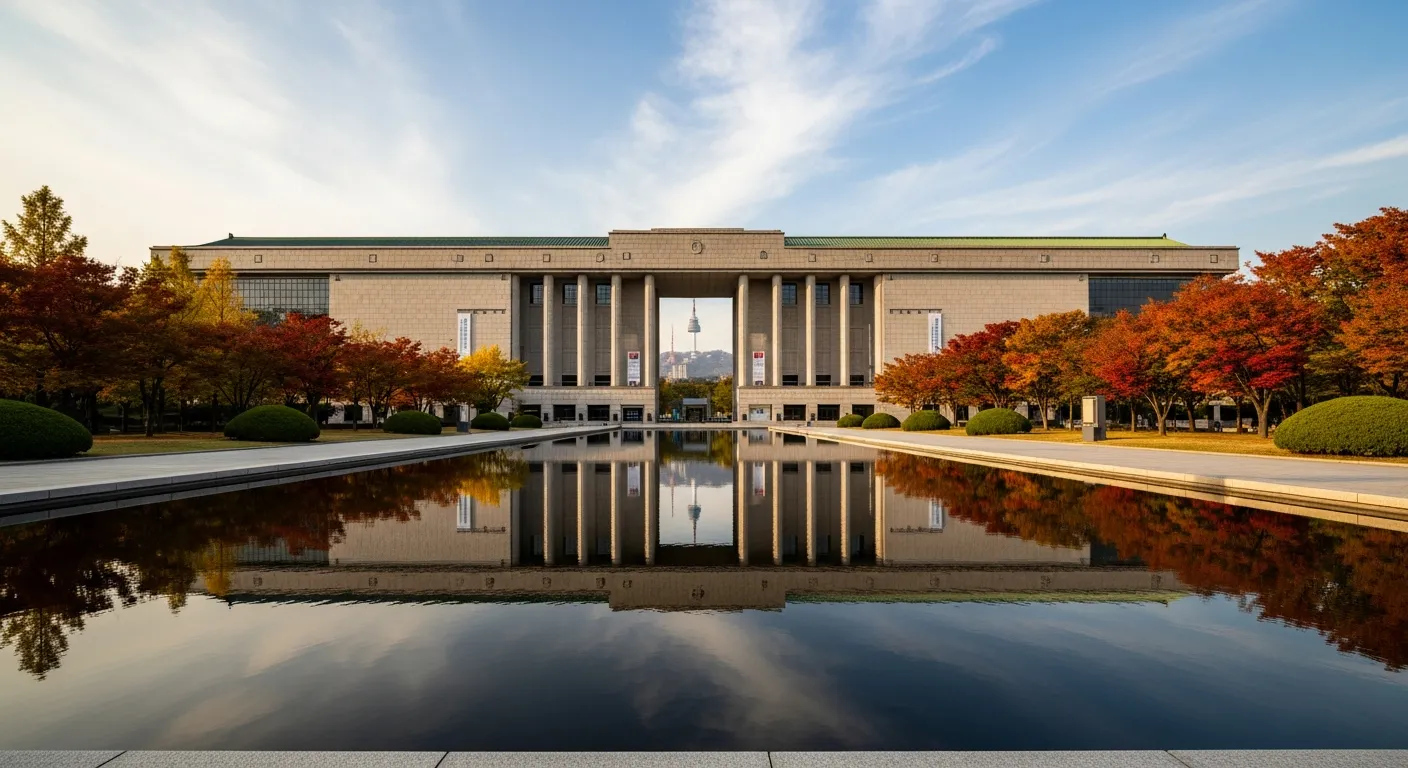
The National Museum of Korea moved to its current Yongsan home in 2005 — a vast stone building framing a central 'Path of History' that aligns dramatically with distant Namsan Tower.
Permanent galleries trace Korea from the Paleolithic era through the Goryeo and Joseon dynasties, alongside Asian art galleries with significant Chinese, Japanese, and Central Asian holdings.
Highlights include the Pensive Bodhisattva (National Treasure No. 83), the ten-storey stone pagoda from Gyeongcheonsa Temple, and an exceptional Goryeo celadon collection.
Admission to the permanent collection is free — only special exhibitions are ticketed. Extended hours on Wednesday and Saturday evenings until 9 PM.
Best for: History Enthusiasts · Art Lovers · Budget Travelers
Understanding Korea's National Museum
The National Museum of Korea in Seoul's Yongsan district is one of Asia's largest museums, presenting the peninsula's archaeology, history, and art in a purpose-built complex opened in 2005. Admission to the permanent collection is free, which contributes to its extraordinary annual visitor numbers rivalling Western capitals. The building wraps around a central courtyard and divides logically into archaeology, history, and fine arts wings on three floors. The museum replaced an older facility near Gyeongbokgung Palace and now serves as the flagship institution for school groups from across the country. Digital wayfinding kiosks in the central hall help orient visitors before they choose between archaeology and fine arts routes. The Reflecting Pond and outdoor pagodas provide a contemplative transition between archaeology halls and the calligraphy wing on the upper level.
English labels and audio guides cover major galleries, though depth increases when paired with the museum's mobile app. The location beside Ichon Station on Metro Line 4 and the Jungang Line makes it accessible from central Seoul in under thirty minutes. Weekends and public holidays attract families; weekday mornings offer the calmest viewing for flagship objects like the Pensive Bodhisattva and gold crowns. Evening cultural performances on the outdoor stage occur seasonally and extend the visit beyond gallery hours. Guided tours in English run on fixed schedules posted at the information desk near the main entrance. Storage and conservation facilities behind public galleries support ongoing excavation research from sites nationwide. Free admission makes this museum a default rainy-day destination for Seoul residents, so expect steady foot traffic even outside tourist seasons.
Special exhibitions in the ground-floor gallery require separate tickets and rotate frequently, often hosting international loans. The outdoor grounds include pagodas relocated from temple sites and a pond garden suited to picnics. Plan three hours for a comprehensive permanent collection tour, or ninety minutes for a highlights path through the Golden Treasures and Silla galleries. Celadon and buncheong ware galleries on upper floors connect ceramic history to Japanese and Chinese traditions. The museum replaced an older facility near Gyeongbokgung Palace and now serves as the flagship institution for school groups from across the country. Digital wayfinding kiosks in the central hall help orient visitors before they choose between archaeology and fine arts routes. Foreign-language guided tours depart from the main hall at scheduled times and cover Silla gold crown highlights in under ninety minutes.
Collections Spanning Millennia
Korean archaeology galleries trace settlement from the Paleolithic through the Three Kingdoms period, with Goguryeo tomb murals and Baekje gilt-bronze incense burners demonstrating technical sophistication. Silla Kingdom gold crowns and belts, excavated from royal tombs in Gyeongju, are national icons reproduced in textbooks nationwide. Buddhist sculpture from the Unified Silla and Goryeo periods shows evolving styles from serene bodhisattvas to ornate ritual implements. Evening cultural performances on the outdoor stage occur seasonally and extend the visit beyond gallery hours. Guided tours in English run on fixed schedules posted at the information desk near the main entrance. Baekje and Goguryeo rooms explain kingdom rivalries that shaped the peninsula before Unified Silla absorbed both rivals in the seventh century.
The Calligraphy and Painting Gallery displays rotating works on silk and paper, including landscape scrolls, literati painting, and royal documentary records too light-sensitive for permanent display. Donated collections from private patrons expanded twentieth-century holdings, while the Asia Gallery contextualises Korean artefacts alongside Chinese and Japanese pieces. The museum also stewards movable heritage returned from overseas collections, a politically significant role in Korean cultural diplomacy. Storage and conservation facilities behind public galleries support ongoing excavation research from sites nationwide. Celadon and buncheong ware galleries on upper floors connect ceramic history to Japanese and Chinese traditions. Joseon dynasty white porcelain and buncheong ware galleries connect ceramic innovation to tea culture and courtly ritual across East Asia.
Interactive digital tables and child-friendly discovery zones appear in select galleries without detracting from scholarly presentation. The museum shop sells high-quality reproductions and catalogues unavailable elsewhere. For visitors continuing to Gyeongju or Buyeo, this museum provides essential context before viewing sites in situ. Returned cultural properties from overseas collections appear in dedicated cases with labels explaining repatriation agreements and ongoing research.
Seoul's National Museum in Context
Yongsan Family Park surrounds the museum building, making it easy to combine a half-day visit with a Han River walk or lunch in the Itaewon district nearby. English signage is excellent throughout permanent galleries, and free admission removes the pressure to rush through every hall in a single visit. The museum shop stocks scholarly catalogs and reproduction celadon that make meaningful souvenirs without the markup of tourist-district vendors.
Foreign visitors often pair the National Museum with Gyeongbokgung Palace or the War Memorial of Korea on the same day — both are short taxi rides away and together tell the story of Korean dynastic culture and twentieth-century division. Allow a full morning for the permanent collection and reserve afternoon energy for the special exhibition hall if a major show is running.
Photography is permitted in most permanent galleries without flash. The outdoor garden with pagodas relocated from regional temples offers quiet reflection space between intensive gallery sessions and is especially beautiful during cherry blossom season in April.
The Calligraphy and Painting Gallery on the second floor presents rotating masterpieces on silk and paper that cannot remain on permanent display due to light sensitivity — check the museum website for which national treasures are currently visible during your visit.
Ceramics galleries tracing celadon from Goryeo through Joseon dynasties connect directly to the special exhibition on celadon running through August 2026 — a rare chance to see national treasures displayed outside climate-controlled storage vaults.
Wing-by-wing visitor guide
Focused routes for National Museum of Korea — pick one wing per visit to avoid museum fatigue.
Archaeology Gallery
⏱ 90 minutesPrehistory through the Three Kingdoms period unfolds chronologically with tomb artefacts, weapons, and daily life objects. Gold regalia from Silla tombs anchors the later sections and draws the heaviest photography traffic. The Pensive Bodhisattva gilt-bronze statue in the Three Kingdoms section is among the most photographed objects in the entire museum.
- • Silla gold crowns with spangled tree-of-life motifs
- • Goguryeo tomb mural replicas and brick tombs
- • Baekje gilt-bronze incense burner masterpiece
- • Iron Age dolmen and agricultural tools
- • Celadon prototypes from early Korean kilns
Calligraphy and Painting Gallery
⏱ 60 minutesRotating displays of ink painting, calligraphy, and Buddhist art require climate-controlled cases, so repeat visits often reveal different works. Labels explain literati culture and royal court patronage traditions. Curators rotate fragile scroll paintings every few months, so returning visitors often encounter different masterpieces in the same rooms.
- • Landscape scrolls by Joseon dynasty masters
- • Buddhist hanging scrolls and ritual paintings
- • Royal documentary and diplomatic manuscripts
- • Portrait albums of meritorious officials
- • Seasonal rotation — check current featured artists
Asia Gallery and World Arts
⏱ 45 minutesComparative displays place Korean objects alongside Chinese, Japanese, and Central Asian material, highlighting trade routes and shared Buddhist iconography. Quieter than the archaeology floors, this wing suits unhurried study. Comparative displays with Chinese Tang sancai and Japanese Heian sculpture clarify how Korean artisans adapted continental techniques locally.
- • Chinese bronze mirrors and ceramic exchanges
- • Japanese lacquerware and tea-culture objects
- • Central Asian glass and Silk Road artefacts
- • Southeast Asian ritual sculpture
- • Comparative celadon traditions across East Asia
How long do you need at National Museum of Korea?
Allow 2–3 hours. A focused route through 4 must-see highlights at National Museum of Korea without museum fatigue. Follow the stops in order:
- 1
Pensive Bodhisattva (National Treasure No. 83)
📍 Prehistory and Ancient History Gallery
A gilt-bronze bodhisattva seated in meditation with one leg crossed — the most celebrated single sculpture in Korean art history.
- 2
Ten-Storey Stone Pagoda from Gyeongcheonsa
📍 Medieval and Early Modern Gallery
A 13.5-metre marble pagoda originally from Gyeongcheonsa Temple — each storey carved with Buddhas and architectural detail.
- 3
Goryeo Celadon Ewer with Willow Design
📍 Calligraphy and Painting Gallery, Celadon section
A jade-green celadon ewer with inlaid willow and reed design — Goryeo celadon is considered the pinnacle of Korean ceramic art.
- 4
Gold Crown from Silla
📍 Prehistory and Ancient History Gallery
A gold crown with jade pendants and tree-branch ornaments from a Silla royal tomb — emblematic of Korea's ancient kingdoms.
What are the must-see works at National Museum of Korea?
4 highlights that define the collection: Pensive Bodhisattva (National Treasure No. 83), Ten-Storey Stone Pagoda from Gyeongcheonsa, Goryeo Celadon Ewer with Willow Design and more.
Pensive Bodhisattva (National Treasure No. 83)
Three Kingdoms sculptor · 7th century
📍 Prehistory and Ancient History Gallery
A gilt-bronze bodhisattva seated in meditation with one leg crossed — the most celebrated single sculpture in Korean art history.
Ten-Storey Stone Pagoda from Gyeongcheonsa
Goryeo sculptors · 1348
📍 Medieval and Early Modern Gallery
A 13.5-metre marble pagoda originally from Gyeongcheonsa Temple — each storey carved with Buddhas and architectural detail.
Goryeo Celadon Ewer with Willow Design
Goryeo potters · 12th century
📍 Calligraphy and Painting Gallery, Celadon section
A jade-green celadon ewer with inlaid willow and reed design — Goryeo celadon is considered the pinnacle of Korean ceramic art.
Gold Crown from Silla
Silla goldsmiths · 5th–6th century
📍 Prehistory and Ancient History Gallery
A gold crown with jade pendants and tree-branch ornaments from a Silla royal tomb — emblematic of Korea's ancient kingdoms.
Collections and highlights
- • Pensive Bodhisattva — National Treasure No. 83
- • Goryeo celadon collection
- • Ten-storey stone pagoda from Gyeongcheonsa Temple
- • Korean calligraphy and painting galleries
- • Asian art galleries — Chinese, Japanese, Central Asian
Tips for visiting National Museum of Korea
- 1.
Best time to visit
Wednesday or Saturday evening (open until 9 PM) for a quieter visit — or weekday mornings at the 9:30 AM opening.
- 2.
Crowds & busy periods
Moderate on weekends; school groups on weekdays. The Pensive Bodhisattva gallery is always popular.
- 3.
Tickets & booking
Free for permanent collection; special exhibitions ticketed separately.
- 4.
Food & cafés nearby
Museum café and restaurant; Itaewon dining district (10-minute walk).
- 5.
Accessibility
Fully accessible with elevators and ramps throughout the vast building.
How do you get to National Museum of Korea?
- metro Ichon Station (Lines 4 and Gyeongui–Jungang) — underground passage directly to the museum
- bus Multiple routes stop at National Museum of Korea bus stop on Seobinggo-ro
- walk 15-minute walk from Itaewon through Yongsan Family Park
Address: 137 Seobinggo-ro, Yongsan-gu, Seoul, South Korea
National Museum of Korea: frequently asked questions
Is admission really free?
Yes — entry to the permanent collection is free; only special exhibitions are ticketed.
How do I get there?
Take the Seoul Metro to Ichon Station (lines 4 and Gyeongui–Jungang), Exit 2, then a short underground passage to the museum.
How long should I spend at National Museum of Korea?
Plan 2–3 hours for the highlights of National Museum of Korea. Our 4-stop route — Pensive Bodhisattva (National Treasure No. 83), Ten-Storey Stone Pagoda from Gyeongcheonsa, Goryeo Celadon Ewer with Willow Design and more — is designed to fit that time. Add extra time for temporary exhibitions, the shop and the café.
What is National Museum of Korea best known for?
The National Museum of Korea moved to its current Yongsan home in 2005. The vast stone building frames a central 'Path of History' that aligns dramatically with distant Namsan tower. Key highlights include Pensive Bodhisattva — National Treasure No. 83, Goryeo celadon collection, Ten-storey stone pagoda from Gyeongcheonsa Temple.
How do I get tickets for National Museum of Korea?
Free admission to permanent galleries. You can walk in without a ticket; paid exhibitions are booked separately. Official site: https://www.museum.go.kr/site/eng/home
What should I prioritise on a short visit?
Start with the Pensive Bodhisattva and Silla gold crown on the ground floor, then the Goryeo celadon and ten-storey pagoda upstairs — these four objects can be seen in 90 minutes.
Is National Museum of Korea open on Mondays?
Yes — National Museum of Korea is open every day of the week, including Mondays and Sundays: 9:30 AM – 5:30 PM; Wednesday and Saturday until 9:00 PM. It closes on 1 January, Seollal and Chuseok days. Check the official website for holiday hours.
What are National Museum of Korea's opening hours?
National Museum of Korea is open daily, 9:30 AM – 5:30 PM; Wednesday and Saturday until 9:00 PM, and closed 1 January, Seollal and Chuseok days. Last entry: 30 minutes before closing. Hours can change for holidays and events, so check the official website before you go.