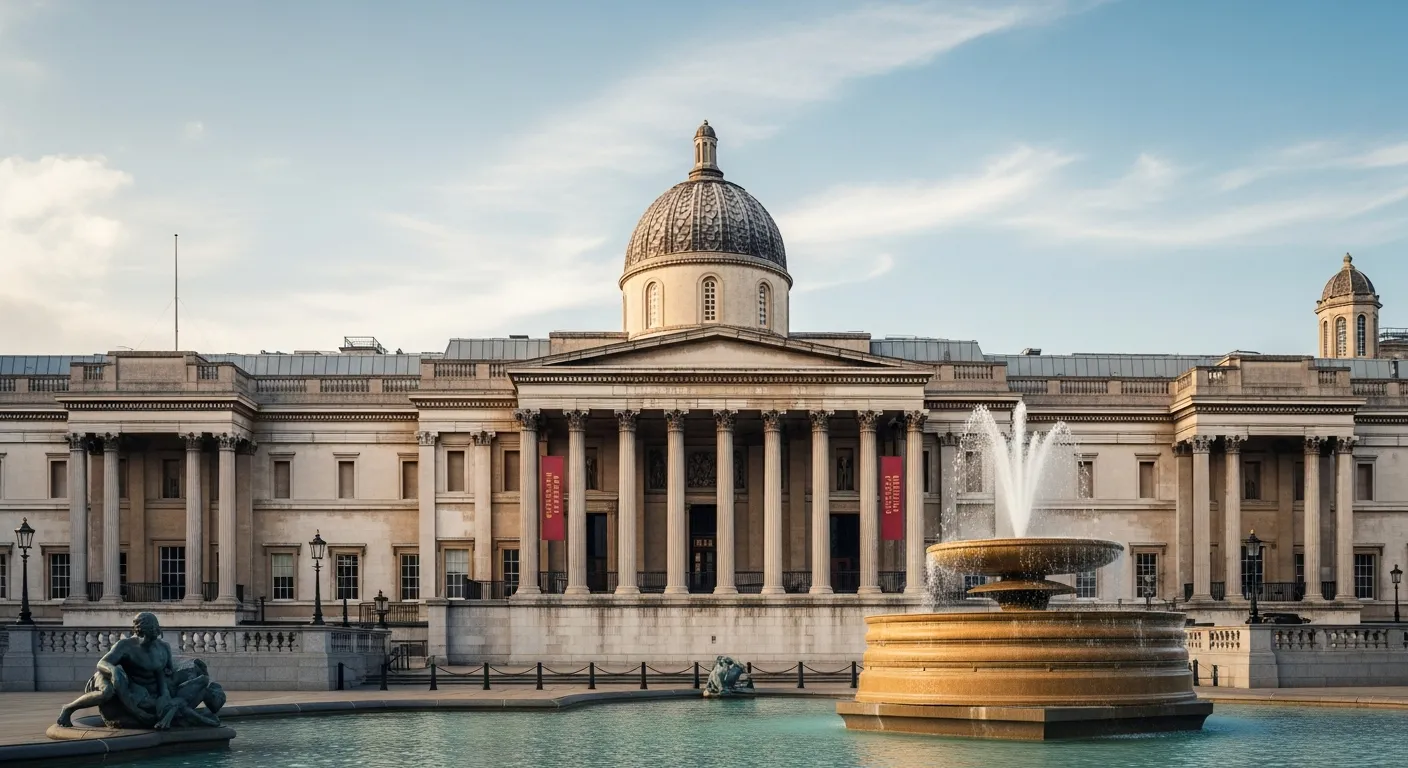
The National Gallery
London · United Kingdom · Founded 1824
Quick answer
The National Gallery is an art museum in Trafalgar Square in the City of Westminster, in Central London. Open daily, 10:00 AM – 6:00 PM; Fridays until 9:00 PM. Admission: free standard admission. Allow 2–3 hours.
Visitor information last reviewed 25 September 2026. Check the official museum site for current details.
The National Gallery at a glance: hours, tickets and time needed
| Opening hours | Daily: 10:00 AM – 6:00 PM; Fridays until 9:00 PM |
|---|---|
| Closed | 24–26 December and 1 January |
| Admission | Free standard admission |
| Free access | General admission always free · Free timed ticket optional for fast-track entry · Some exhibitions ticketed |
| Booking | Tickets usually available on the day |
| Time needed | 2–3 hours |
| Best time to visit | The gallery is open until 9 PM on Fridays — a comparatively uncrowded and atmospheric time to visit. |
| Getting there | Metro: Charing Cross (Northern & Bakerloo) — 2-minute walk across Trafalgar Square |
| Address | Trafalgar Square, London WC2N 5DN, United Kingdom |
| Closures | Building works have closed some rooms and moved some paintings — check the floorplan on arrival. The Sainsbury Wing is now the main entrance. |
| Official website | nationalgallery.org.uk |
Checked 2026-09-25 against the official website. Prices and hours change — confirm before you travel.
What is the National Gallery known for?
The National Gallery is an art museum in Trafalgar Square in the City of Westminster, in Central London. Founded in 1824, it houses a collection of over 2,300 paintings dating from the mid-13th century to 1900.
The gallery is an exempt charity, and a non-departmental public body of the Department for Culture, Media and Sport. Its collection belongs to the government on behalf of the British public.
Unlike comparable museums in continental Europe, the National Gallery was not formed by nationalising an existing royal collection. It came into being when the British government bought 38 paintings from the heirs of John Julius Angerstein.
The present building, the third to house the National Gallery, was designed by William Wilkins from 1832 to 1838. Only the facade onto Trafalgar Square remains essentially unchanged from this time.
Best for: Art Lovers · First-timers · Families · History Enthusiasts
What's on at the National Gallery: current exhibitions
Updated September 2026. Confirm dates and tickets on the official National Gallery website.
Renoir and Love
Opens soon · 3 October 2026 – 31 January 2027About 40 Renoir paintings on love and friendship, including Bal du moulin de la Galette from the Musée d'Orsay, shown in the UK for the first time.
Tickets: £20 off-peak / £25 peak; under-18s free
Yinka Shonibare and Thomas Gainsborough: A Conversation
Opens soon · 15 October 2026 – 7 February 2027Yinka Shonibare's 1998 sculpture reimagining Gainsborough's Mr and Mrs Andrews in West African textiles, shown beside the original painting in Room 1.
Tickets: Free
Van Eyck: The Portraits
Opens soon · 21 November 2026 – 11 April 2027All nine known painted portraits by Jan van Eyck brought together for the first time.
Tickets: £18 including audio guide; under-18s free
Free Old Masters in Trafalgar Square
The National Gallery on Trafalgar Square offers free admission to one of the world's finest painting collections, drawing millions who pause between Westminster and Covent Garden. The Sainsbury Wing entrance on the north side reduces congestion compared with the portico steps facing the square. Room numbers sequentially guide chronology from medieval altarpieces through Impressionism. Trafalgar Square pigeons and street performers outside contrast with the quiet reverence expected inside galleries. The Pigment Room education space explains conservation science during school holiday programs. National Gallery Podcast and YouTube channel preview major acquisitions before they appear on walls. Room 46 Impressionists can be reached quickly from the main portico for visitors with only ninety minutes. Trafalgar Square location makes the National Gallery the natural anchor for a West End day combining Covent Garden and Westminster on foot.
Unlike sprawling encyclopedic museums, the National Gallery concentrates exclusively on European painting, making a highlights tour achievable in two hours. Daily free talks at noon and afternoon focus on single paintings in depth. Friday late opening until 9 PM suits after-work visits with smaller tour-group presence early in the evening. Loan requests from global museums mean favorite paintings occasionally travel, so verify availability online. The National Café in the Sainsbury Wing basement serves full meals without leaving the building. Trafalgar Square pigeons and street performers outside contrast with the quiet reverence expected inside galleries. The Pigment Room education space explains conservation science during school holiday programs. Sainsbury Wing entrance on the north side reduces congestion compared with the main portico steps facing Nelson's Column and street performers.
Photography is prohibited in all galleries to protect works and viewing experience. Coats and large bags may require cloakroom storage during peak periods. The National Café and Espresso Bar in the Sainsbury Wing basement provide rest without leaving the building. National Gallery Podcast and YouTube channel preview major acquisitions before they appear on walls. Room 46 Impressionists can be reached quickly from the main portico for visitors with only ninety minutes. Loan requests from global museums mean favorite paintings occasionally travel, so verify availability online. The National Café in the Sainsbury Wing basement serves full meals without leaving the building. Free admission supported by donations means no ticket barrier, though special exhibitions in the ground floor require separate paid booking.
Seven Centuries of European Painting
The collection's strengths include Van Eyck's Arnolfini Portrait, Leonardo's Virgin of the Rocks, Turner's Fighting Temeraire, and Van Gogh's Sunflowers — works that define art history surveys globally. Italian Renaissance rooms present Raphael, Botticelli, and Titian alongside lesser-known Sienese panels. Northern Renaissance galleries explain oil technique innovation through Holbein and Dürer portraits. Room numbering progresses chronologically from medieval Sainsbury Wing through Renaissance central galleries to Baroque and Impressionist north rooms.
Baroque galleries explode with Rubens, Rembrandt, and Velázquez drama, while Room 34's Impressionists offer Monets and Renoirs steps from the main entrance route. The Wilton Diptych and medieval gold-ground panels in early rooms reward visitors who start chronologically rather than jumping to Impressionism. Van Eyck Arnolfini Portrait in Room 63 rewards close inspection of mirror reflection detail that art history courses analyze worldwide.
The gallery's scientific conservation department publishes research on pigment analysis visible in wall labels. Loan exhibitions in the ground-floor galleries require separate tickets but often reunite dispersed altarpieces. The National Gallery remains a reference collection against which attributions worldwide are measured. Conservation science published by the gallery explains pigment analysis visible in extended labels beside recently cleaned masterpieces.
Trafalgar Square and Free Masterpieces
The National Gallery's free admission makes it unique among world capitals — you can return daily for a single room without financial pressure. Morning light in the Impressionist galleries facing Trafalgar Square is particularly beautiful before tour groups arrive around 10:30 AM.
Friday late opening until 9 PM draws smaller crowds to Van Eyck and Leonardo rooms. The National Café in the Sainsbury Wing basement serves better food than tourist traps on the square above, and the bookshop stocks scholarly catalogs at fair prices.
Connect your visit with the National Portrait Gallery next door — reopened after renovation with free entry — for a full day of British visual culture without leaving Trafalgar Square.
Room 34 Sunflowers and Room 45 Arnolfini Portrait anchor self-guided routes the museum publishes online. Avoid the main portico steps queue by entering via the Sainsbury Wing entrance on Whitcomb Street when lines wrap around Nelson's Column.
Wing-by-wing visitor guide
Focused routes for The National Gallery — pick one wing per visit to avoid museum fatigue.
Sainsbury Wing (1260–1510)
⏱ 60 minutesMedieval and early Renaissance painting fills the Sainsbury Wing basement and ground floor, including the Wilton Diptych and Botticelli mythologies. This entrance wing is ideal for chronological starts. Wilton Diptych medieval royal panel in early rooms demonstrates International Gothic style before Renaissance naturalism transforms European painting.
- • Van Eyck Arnolfini Portrait
- • Botticelli Mars and Venus
- • Wilton Diptych medieval royal panel
- • Uccello Battle of San Romano perspective
- • Early Italian and Netherlandish altarpieces
West Wing Renaissance Highlights
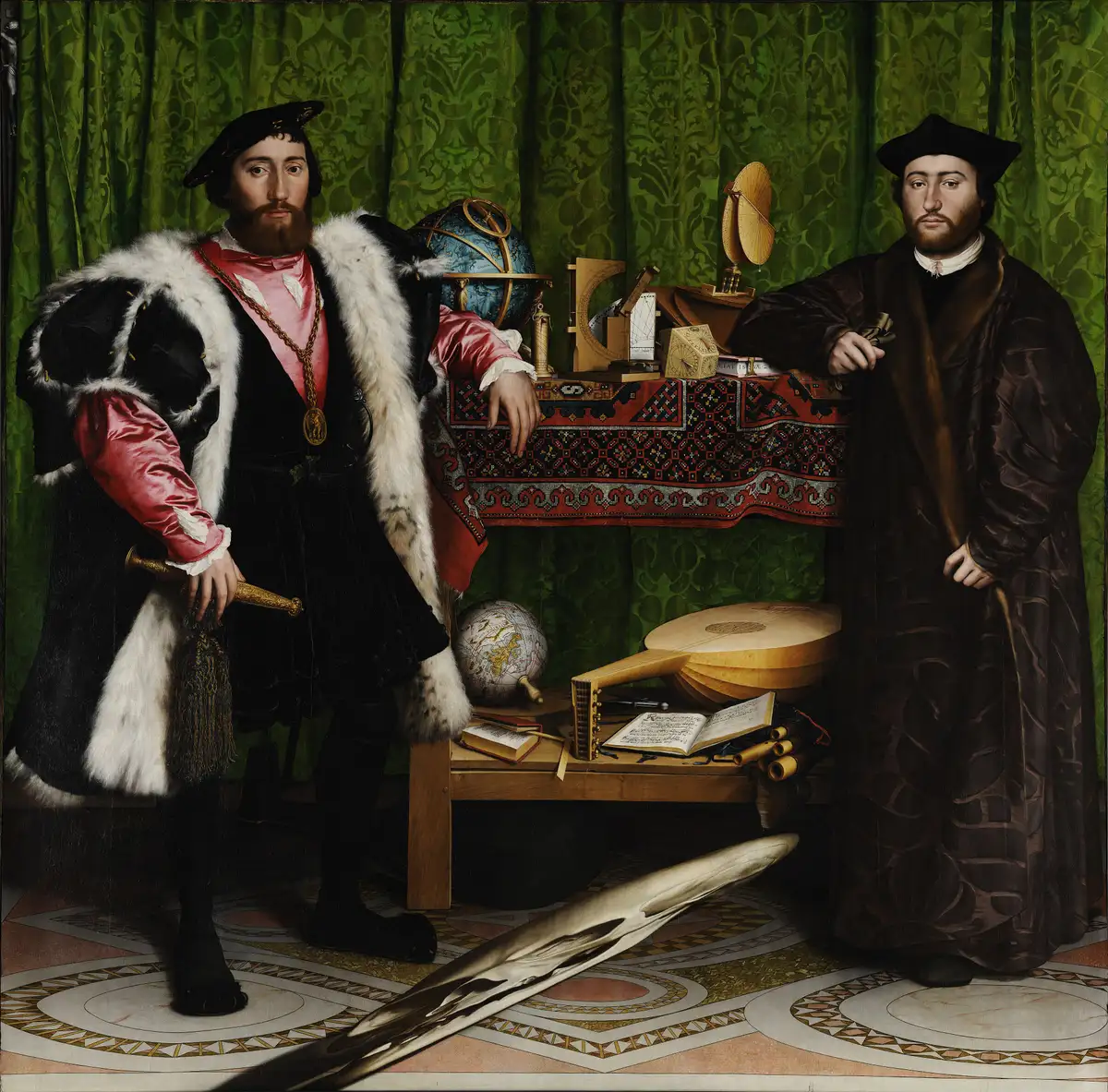
⏱ 75 minutesCentral rooms present High Renaissance and Mannerist masterpieces from Italy and Northern Europe. Leonardo's Virgin of the Rocks anchors the fifteenth-century Italian section. Holbein The Ambassadors in Room 12 includes an anamorphic skull visible only from a sharp oblique viewing angle beside the canvas.
- • Leonardo da Vinci Virgin of the Rocks
- • Michelangelo Entombment (attributed)
- • Raphael Madonna of the Pinks
- • Holbein The Ambassadors anamorphic skull
- • Titian Bacchus and Ariadne
Baroque to Impressionism (Rooms 32–46)
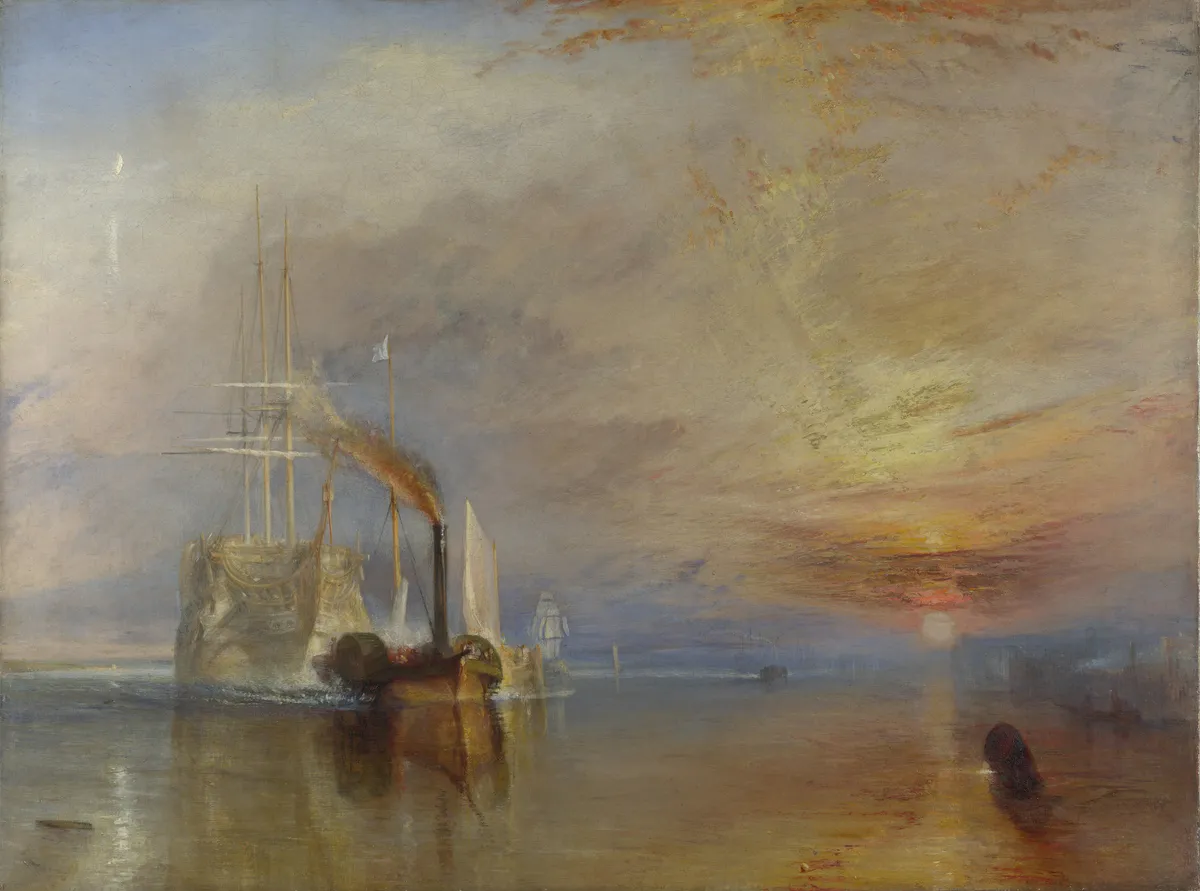
⏱ 60 minutesSeventeenth-century drama through nineteenth-century light characterizes the west and north galleries closest to Trafalgar Square. Turner and Constable British landscapes conclude the chronological journey. Turner Fighting Temeraire in Room 34 captures sunset nostalgia for sail power as steam vessels replaced warships on the Thames.
- • Rembrandt Self-Portrait at the Age of 34
- • Velázquez Rokeby Venus
- • Turner Fighting Temeraire
- • Van Gogh Sunflowers and Chair
- • Seurat Bathers at Asnières pointillism
How long do you need at the National Gallery?
Allow 2–3 hours. A focused route through 4 must-see highlights at The National Gallery without museum fatigue. Follow the stops in order:
- 1
The Arnolfini Portrait
📍 Room 56, Sainsbury Wing
Van Eyck's double portrait of Giovanni Arnolfini and his wife is a virtuoso display of oil painting technique — reflections in the convex mirror, the texture of fur and velvet, and the eerie precision of light through a window.
- 2
The Virgin of the Rocks
📍 Room 66, Sainsbury Wing
The National Gallery's version of Leonardo's mysterious altarpiece — the Madonna shelters the infant Christ and St John in a grotto of strange geological formations.
- 3
Sunflowers
📍 Room 43
One of Van Gogh's celebrated series of Sunflower paintings, made in Arles to decorate his Yellow House for Gauguin's arrival.
- 4
The Hay Wain
📍 Room 34
Constable's bucolic scene of a farm wagon crossing the River Stour won a gold medal at the Paris Salon in 1824 and transformed landscape painting.
What are the must-see works at the National Gallery?
4 highlights that define the collection: The Arnolfini Portrait, The Virgin of the Rocks, Sunflowers and more.
The Arnolfini Portrait
Jan van Eyck · 1434
📍 Room 56, Sainsbury Wing
Van Eyck's double portrait of Giovanni Arnolfini and his wife is a virtuoso display of oil painting technique — reflections in the convex mirror, the texture of fur and velvet, and the eerie precision of light through a window.
The Virgin of the Rocks
Leonardo da Vinci · c. 1491–1508
📍 Room 66, Sainsbury Wing
The National Gallery's version of Leonardo's mysterious altarpiece — the Madonna shelters the infant Christ and St John in a grotto of strange geological formations. A slightly later and arguably finer version than the Louvre's.

Sunflowers
Vincent van Gogh · 1888
📍 Room 43
One of Van Gogh's celebrated series of Sunflower paintings, made in Arles to decorate his Yellow House for Gauguin's arrival. The vivid yellows, achieved with chrome yellow pigment (which has darkened over time), were revolutionary.
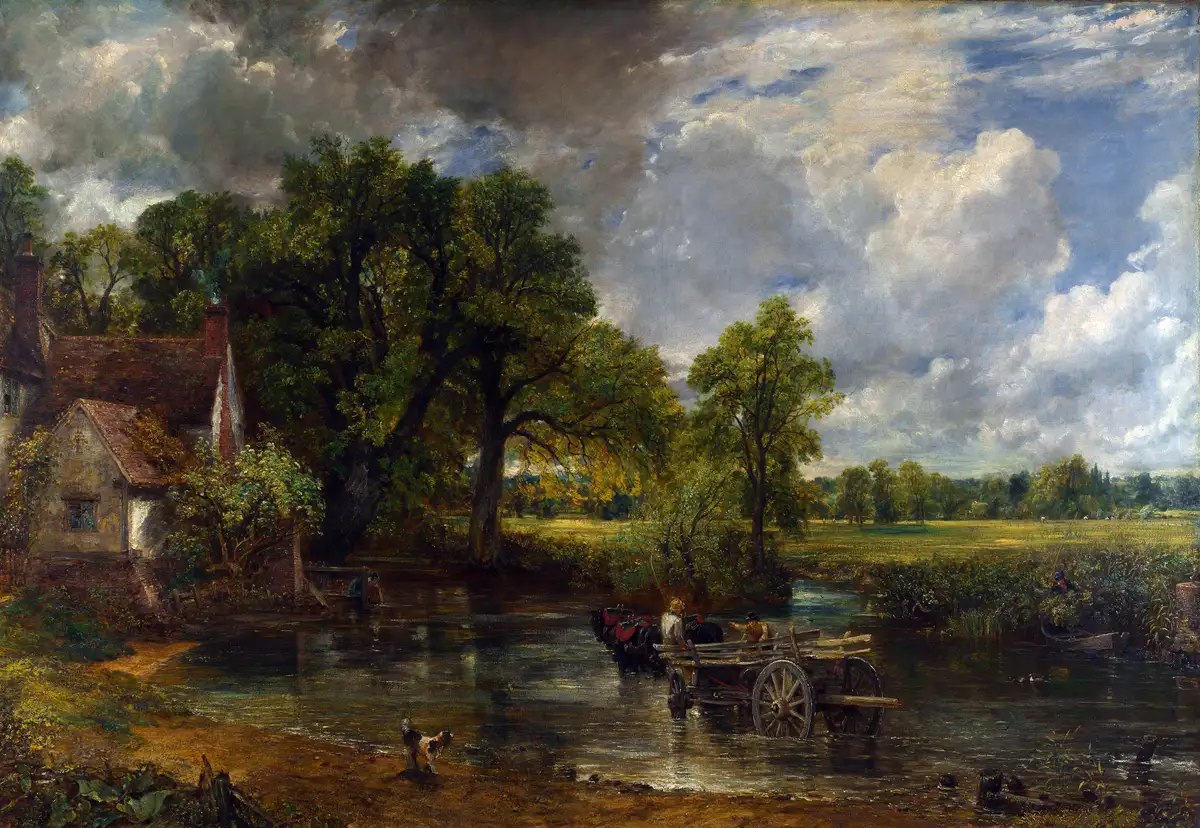
The Hay Wain
John Constable · 1821
📍 Room 34
Constable's bucolic scene of a farm wagon crossing the River Stour won a gold medal at the Paris Salon in 1824 and transformed landscape painting. Its naturalistic depiction of English countryside weather was revolutionary.
Collections and highlights
- • The Arnolfini Portrait by Jan van Eyck
- • Sunflowers by Vincent van Gogh
- • The Fighting Temeraire by J. M. W. Turner
- • The Hay Wain by John Constable
- • Bathers at Asnières by Paul Cézanne
Famous works with their own guide
Tips for visiting the National Gallery
- 1.
Best time to visit
The gallery is open until 9 PM on Fridays — a comparatively uncrowded and atmospheric time to visit. Weekday mornings during school term time are the quietest overall.
- 2.
Tickets & booking
The permanent collection is entirely free — no booking required. Major temporary exhibitions require paid tickets bookable online in advance. The collection is huge — plan a focused route using the museum map.
- 3.
Accessibility
Fully accessible with step-free entrance on Trafalgar Square and Getty Entrance. Wheelchairs available free of charge. Audio guides, large-print gallery guides, and tactile tours available.
- 4.
Photography rules
Photography for personal use is permitted in the permanent collection galleries. Flash and tripods are not permitted. Temporary exhibitions may have different rules — check posted signs.
How do you get to the National Gallery?
- metro Charing Cross (Northern & Bakerloo) — 2-minute walk across Trafalgar Square
- metro Leicester Square (Northern & Piccadilly) — 5-minute walk south
- bus Lines 3, 6, 9, 11, 12, 13, 15, 23, 24, 87, 88, 139, 453 — stop: Trafalgar Square / Charing Cross
- train Charing Cross railway station — 3-minute walk
Address: Trafalgar Square, London WC2N 5DN, United Kingdom
The National Gallery: frequently asked questions
Is the National Gallery London free?
Yes — admission to the National Gallery's permanent collection is entirely free. It is one of the finest free art museums in the world. Special temporary exhibitions carry a ticket price (typically £20–£25). The museum is open daily and no booking is required for free entry.
What are the most famous paintings at the National Gallery London?
The Arnolfini Portrait (1434) by Jan van Eyck — one of the earliest and most technically sophisticated oil paintings; The Fighting Temeraire (1839) by J.M.W. Turner — voted the greatest painting in Britain; Sunflowers (1888) by van Gogh; The Hay Wain (1821) by Constable; Bathers at Asnières (1884) by Seurat; and Velázquez's The Rokeby Venus — one of the most celebrated female nudes in Western art.
Does the National Gallery have the Van Gogh Sunflowers?
Yes — the National Gallery holds one of several versions of Van Gogh's Sunflowers series. Van Gogh painted five versions of his iconic sunflowers series in 1888 in Arles. The National Gallery's version (August 1888) is generally considered the finest and most famous of the group. It hangs in Room 43 of the West Wing.
How long does a visit to the National Gallery take?
The National Gallery has over 2,300 paintings in 66 rooms arranged broadly chronologically from the 13th to the 19th century. A highlights tour of the most famous works takes 1.5–2 hours. A thorough visit through all rooms takes 3–4 hours. Audio guides and free floor plans are available at the main entrance.
What are the opening hours of the National Gallery?
The National Gallery is open daily from 10:00 AM to 6:00 PM. On Fridays, the museum stays open until 9:00 PM. The gallery is closed on 24–26 December and 1 January. Located on Trafalgar Square, it is one of the most central and accessible major museums in London.
How long should I spend at The National Gallery?
Plan 2–3 hours for the highlights of the National Gallery. Our 4-stop route — The Arnolfini Portrait, The Virgin of the Rocks, Sunflowers and more — is designed to fit that time. Add extra time for temporary exhibitions, the shop and the café.
Is the National Gallery open on Mondays?
Yes — the National Gallery is open every day of the week, including Mondays and Sundays: 10:00 AM – 6:00 PM; Fridays until 9:00 PM. It closes on 24–26 December and 1 January. Check the official website for holiday hours.