Fundació Joan Miró
Quick answer
Fundació Joan Miró in Barcelona, Spain — joan Miró conceived the foundation as a centre for the study of contemporary art. Open Tuesday to Sunday: 10:00 AM – 6:00 PM; closed Mondays. Admission: €14 standard admission. Allow 1.5–2 hours.
Visitor information last reviewed 30 June 2026. Check the official museum site for current details.
Fundació Joan Miró at a glance: hours, tickets and time needed
| Opening hours | Tuesday to Sunday: 10:00 AM – 6:00 PM |
|---|---|
| Closed | Mondays |
| Admission | €14 standard admission |
| Booking | Tickets usually available on the day |
| Time needed | 1.5–2 hours |
| Best time to visit | Weekday mornings at 10 AM opening — Montjuïc is quiet before tour groups arrive. |
| Getting there | Funicular: Funicular de Montjuïc from Paral·lel metro (Lines 2 and 3) — 3-minute ride, then 5-minute walk through Montjuïc gardens |
| Address | Parc de Montjuïc, s/n, 08038 Barcelona, Spain |
| Official website | fmirobcn.org |
Checked 2026-06-30 against the official website. Prices and hours change — confirm before you travel.
What is Fundació Joan Miró known for?
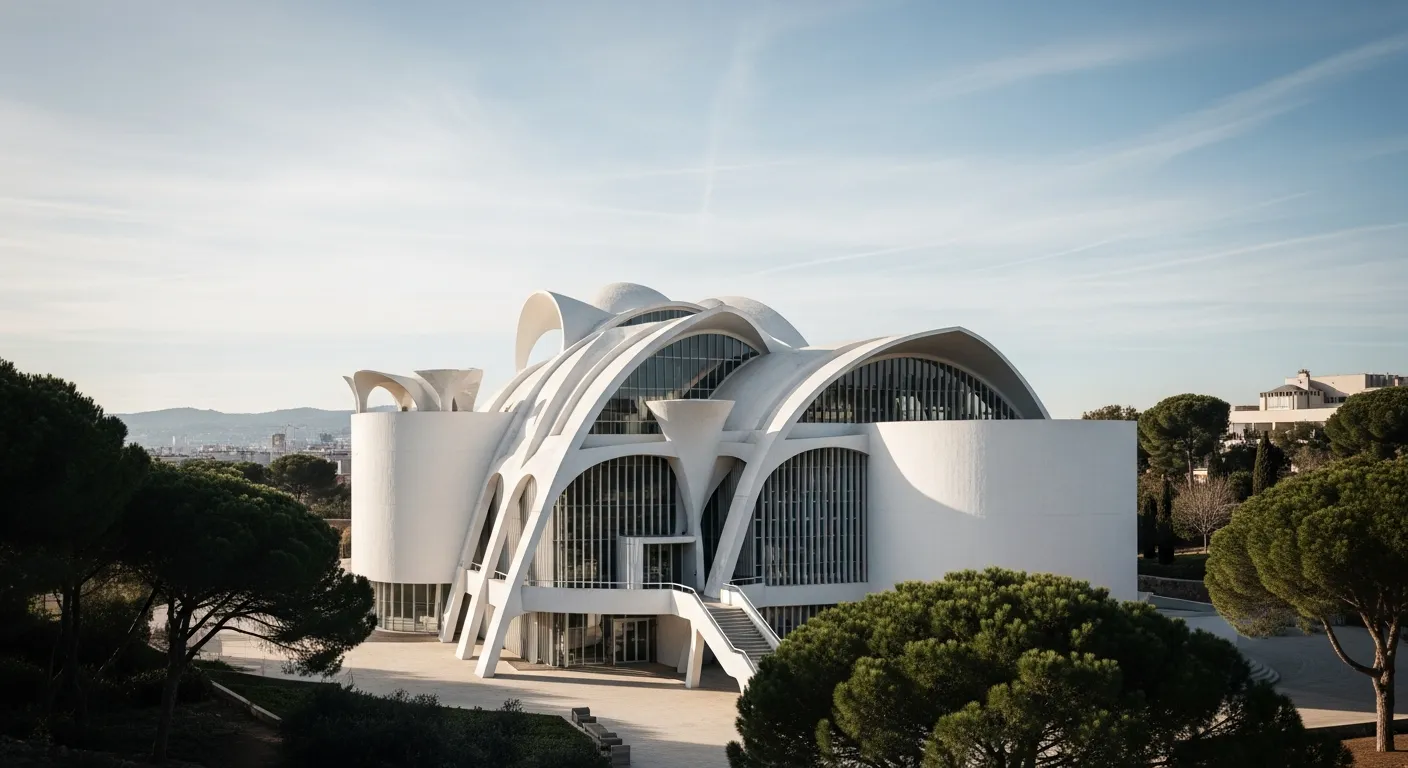
Joan Miró conceived the Fundació as a centre for the study and display of contemporary art, enlisting his friend Josep Lluís Sert — a leading Catalan modernist architect — to design the building on Montjuïc hill. Opened in 1975, the white cubic volumes, interior courtyards, and cylindrical light wells create a Mediterranean modernist masterpiece that is itself a work of art.
The collection holds more than 14,000 works by Miró — paintings, sculptures, textiles, prints, and drawings spanning his entire career from early Fauvist experiments through Surrealist masterpieces to the bold simplified forms of his late period. The rooftop sculpture gallery displays monumental bronzes against panoramic views of Barcelona.
Miró's playful, symbolic language — stars, birds, ladders, and biomorphic forms in primary colours — is displayed alongside rotating exhibitions of contemporary artists that Miró himself would have championed. Alexander Calder's Mercury Fountain, driven by liquid mercury, remains one of the most unusual sculptures in any museum.
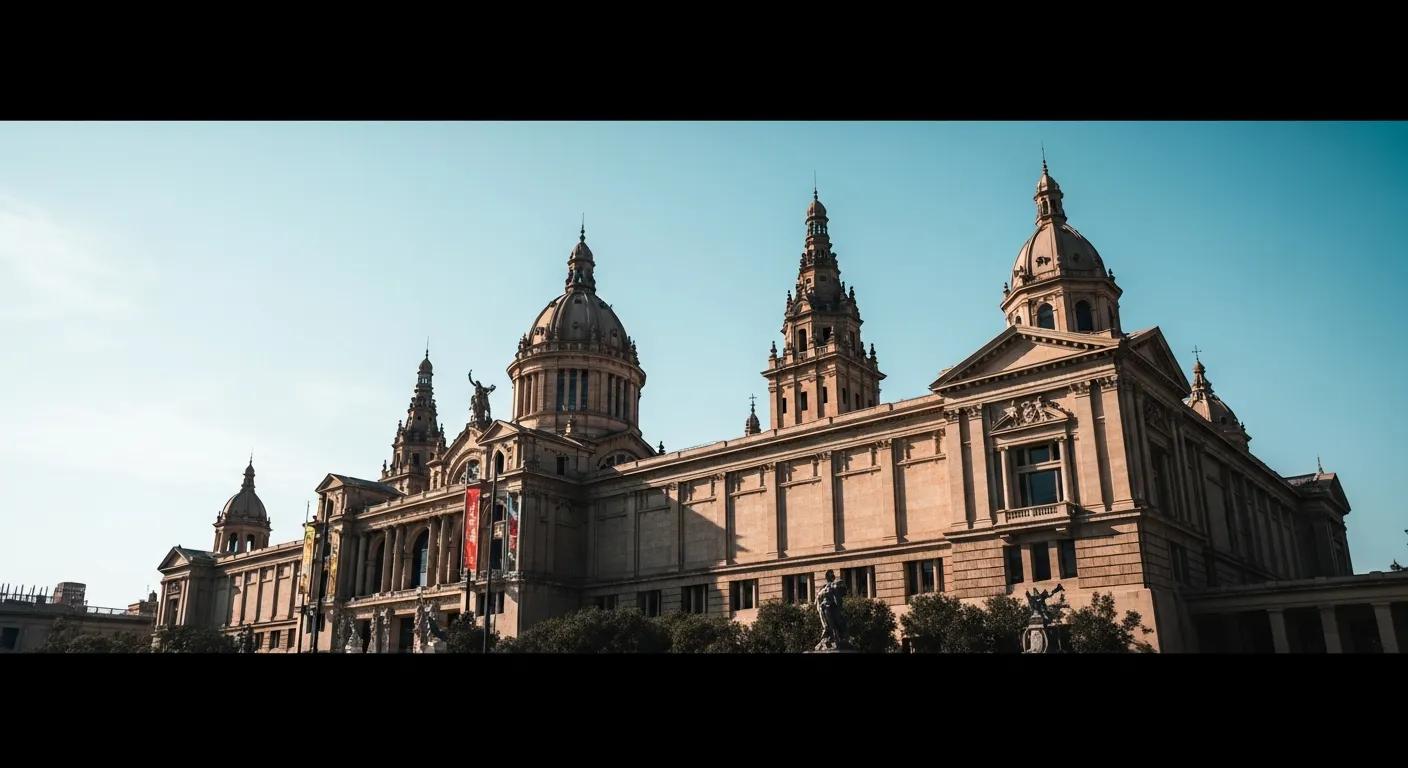
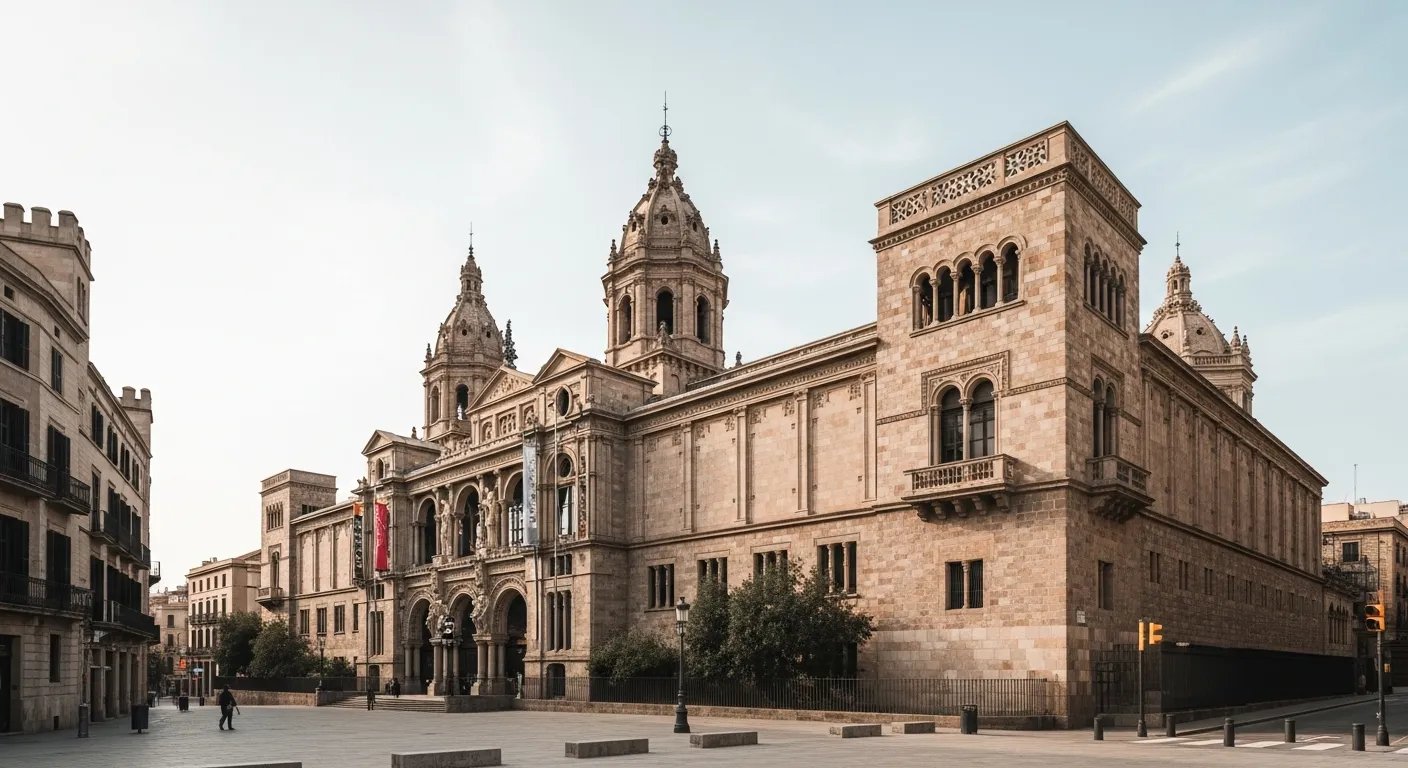
Montjuïc offers a full day of culture: the Fundació sits near the MNAC (Catalan National Art Museum), the Poble Espanyol, and the Olympic stadium. The funicular from Paral·lel metro station is the most scenic approach.
Best for: Art Lovers · Contemporary Art · Families
How long do you need at Fundació Joan Miró?
Allow 1.5–2 hours. A focused route through 4 must-see highlights at Fundació Joan Miró without museum fatigue. Follow the stops in order:
- 1
Tapestry of the Fundació
📍 Main entrance hall
A monumental wool tapestry designed by Miró for the building's inauguration — bold primary colours and symbolic forms welcoming visitors to the artist's world.
- 2
Mercury Fountain
📍 Ground floor terrace
Calder's fountain of flowing liquid mercury — originally created for the Spanish Republic's pavilion at the 1937 Paris Exposition alongside Picasso's Guernica.
- 3
Woman and Bird in the Night
📍 Rooftop sculpture gallery
A monumental painted bronze on the sculpture terrace — Miró's simplified female figure with a bird, one of his most recognisable late forms, set against Barcelona's skyline.
- 4
Painting on White Background for the Cell of a Recluse
📍 Level 1 galleries
A vast white canvas with a single bold red stroke and Miró's characteristic signs — exemplifying the radical simplification of his late period when he worked on monumental scale.
What are the must-see works at Fundació Joan Miró?
4 highlights that define the collection: Tapestry of the Fundació, Mercury Fountain, Woman and Bird in the Night and more.
Tapestry of the Fundació
Joan Miró · 1979
📍 Main entrance hall
A monumental wool tapestry designed by Miró for the building's inauguration — bold primary colours and symbolic forms welcoming visitors to the artist's world.
Mercury Fountain
Alexander Calder · 1937
📍 Ground floor terrace
Calder's fountain of flowing liquid mercury — originally created for the Spanish Republic's pavilion at the 1937 Paris Exposition alongside Picasso's Guernica. One of the most unusual kinetic sculptures ever made.
Woman and Bird in the Night
Joan Miró · 1971
📍 Rooftop sculpture gallery
A monumental painted bronze on the sculpture terrace — Miró's simplified female figure with a bird, one of his most recognisable late forms, set against Barcelona's skyline.
Painting on White Background for the Cell of a Recluse
Joan Miró · 1968
📍 Level 1 galleries
A vast white canvas with a single bold red stroke and Miró's characteristic signs — exemplifying the radical simplification of his late period when he worked on monumental scale.
Collections and highlights
- • Miró paintings from 1917 to 1983
- • Rooftop sculpture gallery with monumental bronzes
- • Calder's Mercury Fountain
- • Textile and tapestry designs
- • Print and drawing archive — over 8,000 works on paper
- • Sert's Mediterranean modernist architecture
- • Rotating contemporary art exhibitions
- • Library and study centre for Miró research
Tips for visiting Fundació Joan Miró
- 1.
Best time to visit
Weekday mornings at 10 AM opening — Montjuïc is quiet before tour groups arrive. The rooftop sculpture gallery is best in morning light.
- 2.
Crowds & busy periods
Moderate — less crowded than the Sagrada Família or Park Güell. Summer weekends on Montjuïc can be busy with multiple attractions.
- 3.
Tickets & booking
Book at fmirobcn.org. €14 standard admission; under-15s free. Articket Barcelona pass includes the Fundació along with six other museums.
- 4.
Food & cafés nearby
Café inside the Fundació with terrace views; restaurants at Montjuïc castle and the MNAC nearby. Bring water for the Montjuïc walk.
- 5.
Accessibility
Fully accessible with elevators to all levels including the rooftop. The funicular from Paral·lel is wheelchair accessible.
How do you get to Fundació Joan Miró?
- funicular Funicular de Montjuïc from Paral·lel metro (Lines 2 and 3) — 3-minute ride, then 5-minute walk through Montjuïc gardens
- bus Bus 150 from Plaça Espanya to Montjuïc castle, stopping near the Fundació
- metro Line 3 to Espanya, then 15-minute uphill walk through Montjuïc gardens or transfer to bus 150
Address: Parc de Montjuïc, s/n, 08038 Barcelona, Spain
Fundació Joan Miró: frequently asked questions
How do I reach Montjuïc?
The Funicular and the Telefèric de Montjuïc are the most scenic options from the city.
Is the rooftop part of the visit?
Yes, the sculpture rooftop is included with admission.
How long should I spend at Fundació Joan Miró?
Plan 1.5–2 hours for the highlights of Fundació Joan Miró. Our 4-stop route — Tapestry of the Fundació, Mercury Fountain, Woman and Bird in the Night and more — is designed to fit that time. Add extra time for temporary exhibitions, the shop and the café.
What is Fundació Joan Miró best known for?
Joan Miró conceived the foundation as a centre for the study of contemporary art. The architect and friend Josep Lluís Sert designed the building, which opened in 1975 — a textbook of Mediterranean modernism with white volumes and cylindrical light wells. Key highlights include Miró paintings from 1917 to 1983, Rooftop sculpture gallery with monumental bronzes, Calder's Mercury Fountain.
How do I get tickets for Fundació Joan Miró?
Admission: €14 standard admission. Tickets are usually available on the day, but booking online saves queue time in peak season. Official site: https://www.fmirobcn.org/en/
Is the rooftop sculpture gallery included in admission?
Yes — the sculpture terrace on the building's roof is one of the highlights of the visit, with monumental Miró bronzes and panoramic views of Barcelona, the port, and the Mediterranean. It is accessible by elevator.
How much time should I allow for Montjuïc?
The Fundació needs 1.5–2 hours. Add 2 hours for MNAC, 1 hour for the Olympic stadium, and 1 hour for the Magic Fountain evening show (summer). A full Montjuïc day requires 5–6 hours.
What is the relationship between Miró and Barcelona?
Miró was born in Barcelona in 1893 and maintained a studio in the city throughout his life, though he also worked in Mallorca and Paris. The Fundació was his gift to his native city — he donated the building and thousands of works to create a permanent home for his art and a centre for contemporary creativity.
Is Fundació Joan Miró open on Mondays?
No — Fundació Joan Miró is closed every Monday. It is open Tuesday to Sunday: 10:00 AM – 6:00 PM. Plan a different museum for that day, and check the official website for holiday changes.
What are Fundació Joan Miró's opening hours?
Fundació Joan Miró is open Tuesday to Sunday: 10:00 AM – 6:00 PM, and closed Mondays. Hours can change for holidays and events, so check the official website before you go.
Is Fundació Joan Miró free to visit?
No — standard admission is €14 standard admission.