Canadian Museum of History
Quick answer
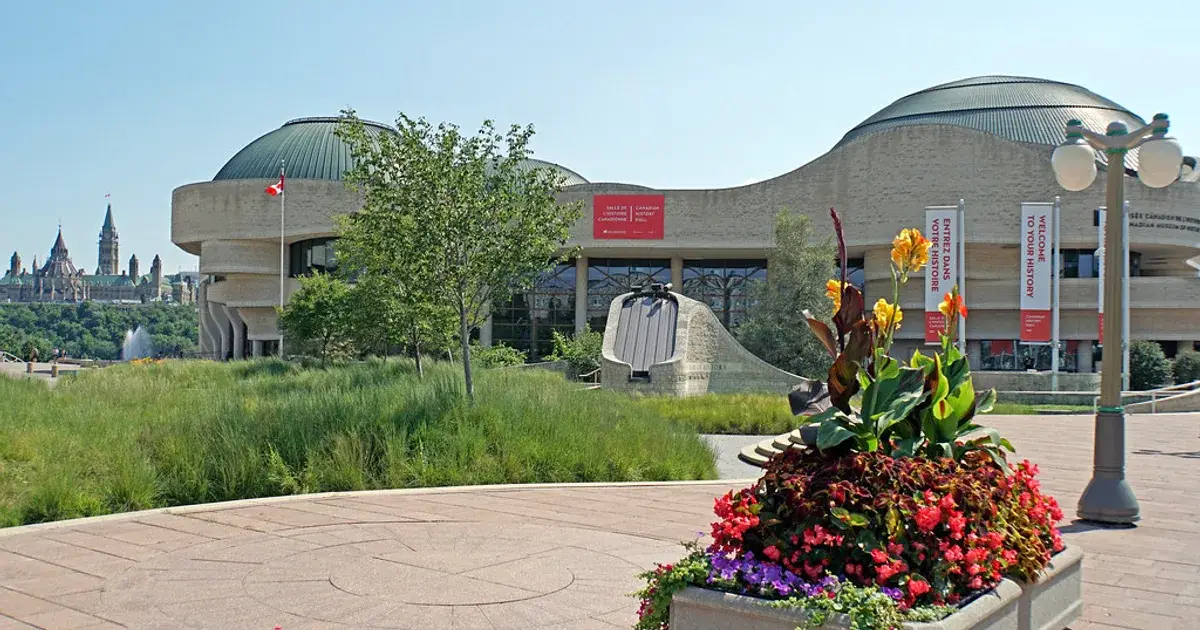
Canadian Museum of History in Gatineau, Canada — canada's most visited museum — across the river from Parliament Hill, with the Grand Hall's Pacific Northwest totem poles, Canadian history galleries, and Douglas Cardinal's curvilinear architecture. Open Wednesday to Sunday: 10:00 AM – 5:00 PM; Thursday until 8:00 PM. Admission: From CA$25 standard admission. Allow 2–3 hours.
Visitor information last reviewed 30 June 2026. Check the official museum site for current details.
Canadian Museum of History at a glance: hours, tickets and time needed
| Opening hours | Wednesday to Sunday: 10:00 AM – 5:00 PM; Thursday until 8:00 PM |
|---|---|
| Admission | From CA$25 standard admission |
| Free or reduced entry | Free Thursday evenings 5–8 PM · Under 3 free |
| Booking | Tickets usually available on the day |
| Time needed | 2–3 hours |
| Best time to visit | Thursday evenings 5–8 PM for free admission. |
| Getting there | Walk: Alexandra Bridge from Ottawa's ByWard Market — 10-minute scenic walk directly to the museum entrance in Gatineau |
| Address | 100 Laurier St, Gatineau, QC K1A 0M8, Canada |
| Official website | historymuseum.ca |
Checked 2026-06-30 against the official website. Prices and hours change — confirm before you travel.
What is Canadian Museum of History known for?
The Canadian Museum of History (formerly the Canadian Museum of Civilization) sits on the Quebec side of the Ottawa River in Gatineau, directly facing Parliament Hill. Designed by Métis-Blackfoot architect Douglas Cardinal, its curvilinear limestone buildings evoke the flow of the river and the organic forms of the Canadian landscape — widely regarded as one of the finest museum buildings in North America.
The Grand Hall is the museum's spectacular centerpiece: a 6-storey space housing the world's largest indoor collection of totem poles and Pacific Northwest Coast house posts, with a backdrop of six Pacific Coast Aboriginal house facades. More than 80,000 visitors stand before these poles annually — they represent one of the greatest assemblies of First Nations monumental carving anywhere.
The Canadian History Hall, reopened in 2017 after a $30 million renovation, traces 15,000 years of Canadian history from the arrival of First Peoples through Confederation to the present. The museum also houses the Canadian Children's Museum — a passport-stamped interactive world tour — and an IMAX theatre.
As Canada's most visited museum with over 1.2 million annual visitors, it serves as the country's national narrative museum. Free admission Thursday evenings from 5–8 PM makes it accessible to the Ottawa-Gatineau community.
Best for: History Enthusiasts · Families · First-timers
How long do you need at Canadian Museum of History?
Allow 2–3 hours. A focused route through 4 must-see highlights at Canadian Museum of History without museum fatigue. Follow the stops in order:
- 1
Great Hall Totem Poles
📍 Grand Hall, Main Level
The world's largest indoor display of Pacific Northwest Coast totem poles and house posts, including works by Haida master Charles Edenshaw.
- 2
The Spirit of Haida Gwaii ( plaster cast)
📍 Grand Hall, Main Level
A plaster maquette of Reid's famous bronze canoe sculpture (the original bronze is at the Canadian Embassy in Washington, D.C.), filled with Haida mythological figures including the Raven, Bear, and Beaver.
- 3
Confederation Cart
📍 Canadian History Hall, Level 3
The horse-drawn carriage used during the 1864 Charlottetown Conference that led to Canadian Confederation.
- 4
Maurice Richard's Locker
📍 Canadian History Hall, Level 3
The original Montreal Forum locker of Maurice 'The Rocket' Richard — hockey's most legendary French-Canadian player.
What are the must-see works at Canadian Museum of History?
4 highlights that define the collection: Great Hall Totem Poles, The Spirit of Haida Gwaii ( plaster cast), Confederation Cart and more.
Great Hall Totem Poles
Haida, Gitxsan, and Nuxalk carvers · 19th–20th century
📍 Grand Hall, Main Level
The world's largest indoor display of Pacific Northwest Coast totem poles and house posts, including works by Haida master Charles Edenshaw. Six Aboriginal house facades line the 112-metre-long hall facing the Ottawa River.
The Spirit of Haida Gwaii ( plaster cast)
Bill Reid · 1991
📍 Grand Hall, Main Level
A plaster maquette of Reid's famous bronze canoe sculpture (the original bronze is at the Canadian Embassy in Washington, D.C.), filled with Haida mythological figures including the Raven, Bear, and Beaver.
Confederation Cart
Historical artifact · 1864
📍 Canadian History Hall, Level 3
The horse-drawn carriage used during the 1864 Charlottetown Conference that led to Canadian Confederation. A tangible link to the negotiations that created the Dominion of Canada in 1867.
Maurice Richard's Locker
Montreal Canadiens · c. 1950s
📍 Canadian History Hall, Level 3
The original Montreal Forum locker of Maurice 'The Rocket' Richard — hockey's most legendary French-Canadian player. Part of the museum's exploration of sport as national identity.
Collections and highlights
- • Grand Hall — Pacific Northwest Coast totem poles
- • Canadian History Hall — 15,000 years of history
- • First Peoples Hall — Aboriginal cultures across Canada
- • Canadian Stamp Collection — 3 million+ objects
- • Canadian Children's Museum — interactive world tour
- • Douglas Cardinal architecture — curvilinear limestone
- • IMAX Theatre — giant-screen documentaries
- • CINÉ+ theatre — French and English programming
Tips for visiting Canadian Museum of History
- 1.
Best time to visit
Thursday evenings 5–8 PM for free admission. Weekday mornings for the Grand Hall without school groups.
- 2.
Crowds & busy periods
Canada Day (July 1), March break, and summer weekends are peak times. The Grand Hall absorbs crowds well; the History Hall narrows on busy days.
- 3.
Tickets & booking
Book at historymuseum.ca; combined tickets with the Canadian War Museum in Ottawa available. Free Thursday evenings.
- 4.
Food & cafés nearby
Panorama Café with views of Parliament Hill; Le Cellier restaurant in nearby Old Hull (Gatineau) for French-Canadian cuisine.
- 5.
Accessibility
Fully accessible. The Grand Hall's scale can be acoustically overwhelming — noise-cancelling headphones helpful for sensory-sensitive visitors.
How do you get to Canadian Museum of History?
- walk Alexandra Bridge from Ottawa's ByWard Market — 10-minute scenic walk directly to the museum entrance in Gatineau
- bus OC Transpo route 8 from downtown Ottawa; STO (Gatineau) routes 33 and 57 stop at the museum on Laurier Street
- car Underground parking garage beneath the museum ($2/hour); cross the Portage Bridge or Macdonald-Cartier Bridge from Ottawa
Address: 100 Laurier St, Gatineau, QC K1A 0M8, Canada
Canadian Museum of History: frequently asked questions
Is the Canadian Museum of History in Ottawa or Gatineau?
The museum is in Gatineau, Quebec, directly across the Ottawa River from Parliament Hill. It is Canada's most visited museum — the Grand Hall's totem poles are the unmissable highlight.
How long should I spend at Canadian Museum of History?
Plan 2–3 hours for the highlights of Canadian Museum of History. Our 4-stop route — Great Hall Totem Poles, The Spirit of Haida Gwaii ( plaster cast), Confederation Cart and more — is designed to fit that time. Add extra time for temporary exhibitions, the shop and the café.
What is Canadian Museum of History best known for?
Canada's most visited museum — across the river from Parliament Hill, with the Grand Hall's Pacific Northwest totem poles, Canadian history galleries, and Douglas Cardinal's curvilinear architecture. Key highlights include Grand Hall — Pacific Northwest Coast totem poles, Canadian History Hall — 15,000 years of history, First Peoples Hall — Aboriginal cultures across Canada.
How do I get tickets for Canadian Museum of History?
Admission: From CA$25 standard admission. Tickets are usually available on the day, but booking online saves queue time in peak season. Official site: https://www.historymuseum.ca/
Is the Canadian Museum of History in Ottawa or Quebec?
The museum is in Gatineau, Quebec — on the north shore of the Ottawa River. However, it is part of Canada's national museum system (like the Canadian War Museum on the Ottawa side) and is commonly visited as part of an Ottawa trip. The Alexandra Bridge makes it a 10-minute walk from Parliament Hill. You cross a provincial border on foot.
What is the difference between the History Hall and the First Peoples Hall?
The Canadian History Hall (2017) presents a chronological narrative of Canadian history from the arrival of First Peoples through European contact, Confederation, and the present — emphasizing diverse perspectives. The First Peoples Hall (formerly separate, now integrated) focuses specifically on the living cultures, art, and traditions of Aboriginal peoples across Canada with greater depth on ethnographic collections.
Is the Canadian Children's Museum worth visiting without kids?
The Children's Museum is designed for ages 3–12 and requires a separate passport-stamped entry — most adult visitors skip it unless accompanying children. However, the Grand Hall, History Hall, and special exhibitions offer more than enough for an adult-focused visit of 2–3 hours.
What are Canadian Museum of History's opening hours?
Canadian Museum of History is open Wednesday to Sunday: 10:00 AM – 5:00 PM; Thursday until 8:00 PM. Hours can change for holidays and events, so check the official website before you go.
Is Canadian Museum of History free to visit?
Not for everyone. Standard admission: From CA$25 standard admission. Free or reduced entry: Free Thursday evenings 5–8 PM; Under 3 free.